


What’s the essential SEO checklist for your small business in 2026?
18 MIN READ/Dec 23, 2025

Summary: This guide walks small businesses through essential SEO steps, simple habits, and practical strategies that actually work. It covers challenges, checklists, best practices, digital marketing connections, social impact, AI support, and outsourcing options to help build reliable, long-lasting SEO growth.
A clear, practical guide designed to help small businesses strengthen visibility, avoid common SEO mistakes, and build a steady, long-term search strategy.
When people look something up online, they don’t think too hard about which link they click. The first few results win almost every time. For a small business, that tiny decision from a stranger often decides how many calls or messages come in. A lot of owners sense that something feels “off” with their website but can’t point to the exact problem. Sometimes the pages load slower than expected; sometimes the content hasn’t been touched in months. And sometimes the website just isn’t set up in a way search engines understand anymore.
Search rules keep changing, and what worked a few years ago doesn’t necessarily hold up in 2026. This is where having an essential SEO checklist helps. It’s not about fancy tricks, more about keeping all the important pieces in one place so nothing gets forgotten. It prevents that quiet slide where rankings drop bit by bit.
Many small businesses eventually hand some tasks to outside experts because managing everything alone becomes too much. Outsourcing SEO services or getting help from digital marketing teams often keeps things steady when the workload grows.
In this post, the guide walks through the areas that actually matter, in simple terms, without turning it into technical noise.
SEO difficulties most small businesses deal with
Before jumping into a long business SEO checklist, it helps to look at the issues that usually slow things down. These problems don’t show up all at once. They pile up gradually, a missed update here, an outdated plugin there, until the website stops performing the way it used to.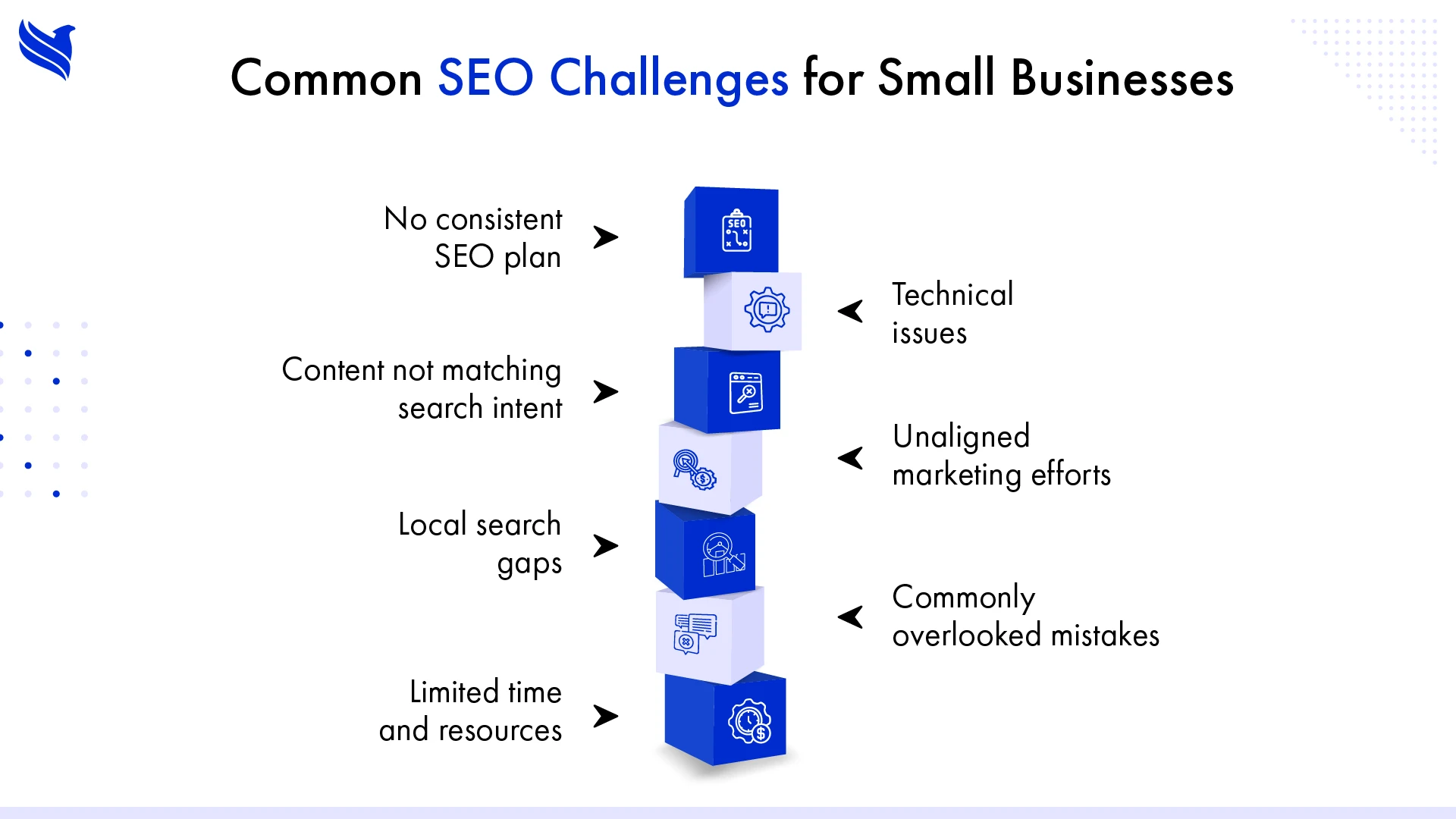
Here are some challenges that come up often:
- No steady plan: Many businesses work on SEO only when traffic drops. Without a small business SEO checklist or a routine, tasks get scattered. Some updates are done, others are skipped, and overall progress becomes unclear.
- Technical trouble: Slow websites, strange redirects, missing headings, or layouts that don’t adjust well on mobile devices create a long chain of small issues. None of them look serious alone, but together they affect SEO performance.
- Content doesn’t match what people search for: A page might sound fine, yet still miss the actual questions customers type into search engines. When this mismatch continues, rankings slowly fall.
- Marketing not working together: SEO becomes weaker when social posts, website content, and other digital marketing strategies run in separate directions instead of supporting each other.
- Local visibility gaps: Small businesses often forget to update their location details, hours, or even basic contact information. These tiny things influence local search more than most people realize.
- Overlooked mistakes: Things like overusing keywords, ignoring analytics, or not adding internal links happen quietly. These common SEO mistakes slowly drag performance down.
- Not enough time: Many teams want to follow SEO best practice guidelines but get pulled into daily operations. This is usually when SEO outsourcing services or digital marketing support become helpful. SEO difficulties most small businesses deal with
Understanding these challenges makes it easier to build an SEO strategy that fits real schedules, not ideal ones.
Practical SEO checklist small businesses can actually follow
Most people search for a long “ultimate SEO checklist” and end up with something that looks more like a software manual. Small businesses rarely need a list that complicated. What usually works best is something plain, easy to follow, and realistic enough to repeat every month without feeling overwhelmed. The point of a checklist is not to impress anyone; it’s to keep the important tasks from slipping through the cracks.
Here’s a version that fits how small teams work in real life:
- Start with your website basics: Look at the homepage and main pages first. Are the titles clear? Are the descriptions accurate? Not stuffed with keywords, just understandable. A few lines that tell people what the page is about.
- Make sure the site loads reasonably fast: It doesn’t need to be perfect. Just fast enough that someone on average mobile internet won’t get annoyed. Compress large images, remove unused plugins, and check if any scripts are slowing things down.
- Check mobile friendliness: More than half of searches happen on mobile devices. If someone has to pinch and zoom, the page is already losing its visitors.
- Review your content: See if your pages answer the actual questions people type online. If customers often ask you the same things in person, chances are those questions should appear on your site too. This alone fixes a surprising amount of SEO performance issues.
- Look at your URLs and internal links: Clean URLs help search engines understand your structure. Internal links help search engines move through your site more easily. A simple link from one useful page to another can make a difference.
- Add or update your local listings: Google Business Profile, hours, location, phone number, these small details matter a lot for local searches. Make sure everything matches your website.
- Check for old or duplicate content: Pages that say the same thing in different ways can confuse search engines. Merge them if possible. Update them if they are still relevant.
- Keep an eye on basic analytics: You don’t need fancy dashboards. Just enough data to understand what content people visit, where they drop off, and which pages bring the most leads.
- Refresh content occasionally: A few new lines, updated images, or a short note can help a page look more active. Search engines appreciate recent updates.
- Organize tasks in a monthly routine: Instead of doing everything in one day, spread the tasks out. One week for content checks, one week for technical fixes, one week for local updates, and so on.
This checklist isn’t rigid. It’s supposed to grow with your business. As you add new pages or expand your services, you can adjust the list. The goal is consistency, something small businesses often struggle with. A steady routine, even if simple, usually beats complicated plans that never get finished.
What small businesses gain when SEO is done properly
When SEO is handled in a steady and sensible way, small businesses begin to notice changes that don’t always show up on a chart right away. These improvements tend to show themselves gradually, a few more calls each week, more people hitting the “contact” page, customers showing up saying they “found you online.” These small signals usually appear before the big metrics do.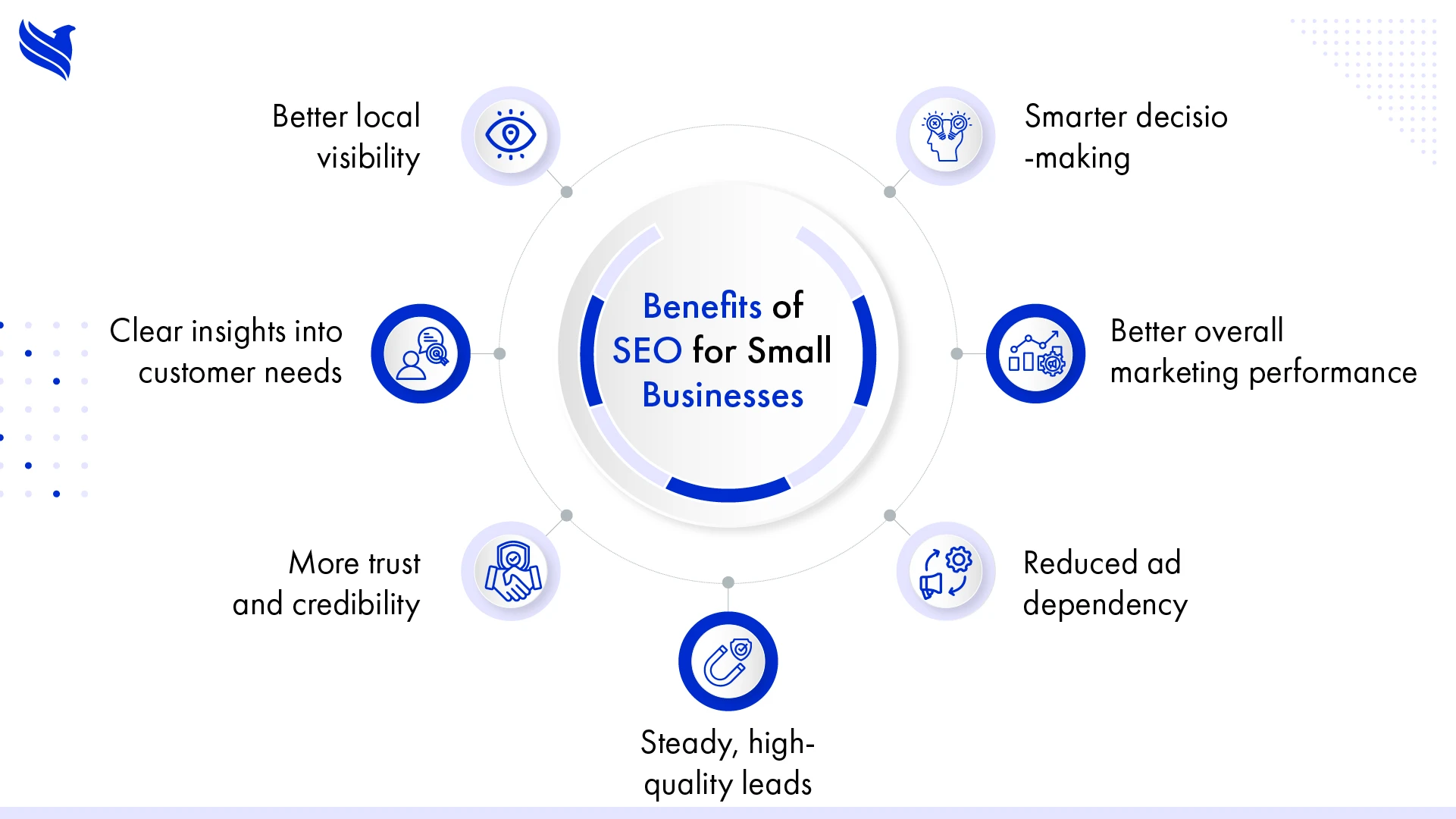
Here are some real, practical benefits:
- Better visibility where it actually matters: Most small businesses don’t need nationwide reach. They need to appear in front of people nearby who are already looking for their service. When the website and listings are updated consistently, local visibility improves. People can find the business faster, and the search results look more trustworthy.
- A clearer understanding of what customers want: When you track basic SEO numbers, you get a window into customer behavior. You see which topics matter, which pages people spend time on, and what information they keep returning to. This helps shape content, services, and even marketing conversations.
- Stronger trust and credibility: People naturally trust businesses that show up on the first page. It feels like a recommendation, even though it isn’t. A strong SEO strategy reinforces this trust. When customers see accurate details, proper reviews, and helpful information, they feel more comfortable choosing your business.
- Better website experience for visitors: Most SEO best practice guidelines revolve around making websites easier to use; faster pages, simple navigation, clear text, and solid structure. When these areas improve, the site becomes more pleasant for customers, even if they don’t know why it feels better.
- More consistent leads: Good SEO doesn’t work overnight, but it builds a steady flow of people who are genuinely interested in the service. Unlike ads, which stop the moment you pause them, SEO continues working in the background.
- Reduced dependency on paid ads: Once your organic traffic grows, you don’t need to rely heavily on paid campaigns. You can still run ads when needed, but you won’t be forced to spend just to maintain visibility.
- A smoother marketing system overall: With improved ranking and better content, every other digital marketing strategy also performs better. Social posts reach more people, email campaigns get more traffic, and even offline marketing feels more effective when the online presence matches it.
- Easier decision-making: SEO creates a trail of information. Over time, patterns appear, what works, what doesn’t, which pages help conversions, and which content attracts the wrong audience. This makes future planning easier and more grounded.
In simple words, a strong SEO foundation creates stability. It supports everything else around it: marketing, brand reputation, customer experience, and long-term growth. Whether managed in-house or through outsource SEO services, these benefits become clearer as the business grows.
SEO best practices that actually make a difference
When people hear “SEO best practice,” they often imagine long technical guides or complicated tools. But most small businesses benefit more from simple habits done regularly, the same way a shop stays clean because someone sweeps a little every day, not because they scrub the entire store once a month.
Here are a few practices that tend to hold up over time:
- Keep your content grounded in real questions: Many businesses write pages that sound nice but don’t speak to what customers actually search. Look through real conversations, emails, customer messages; these usually reveal the topics your site should cover.
- Use natural language instead of overthinking keywords: Search engines have gotten better at understanding phrasing. Adding the right keyword matters, but only when it fits naturally. Forced repetition usually does more harm than good.
- Refresh older pages before creating too many new ones: Most businesses already have content worth saving. A few updated paragraphs, a clearer headline, or fresh details can bring those pages back to life.
- Keep navigation simple: If customers can’t find a page in a few clicks, search engines struggle too. Clean menus help both humans and algorithms.
- Maintain consistency in small details: Operating hours, phone numbers, and addresses should match across the website and listings. These tiny inconsistencies confuse search engines more than most people expect.
- Watch for broken or outdated links: A link leading to a dead page sends a negative signal. Checking these once in a while prevents small problems from stacking up.
- Balance visuals with load time: Large images look nice but slow everything down. Compress them so the pages feel light without losing quality.
- Connect your SEO efforts with other digital marketing services: When your content, social posts, and emails work together, search engines notice more activity around your brand.
None of these best practices are complicated, but they work well because they focus on clarity, consistency, and user experience; all things small businesses can control even without a big team. With a little routine, these habits form the base for a stronger SEO strategy.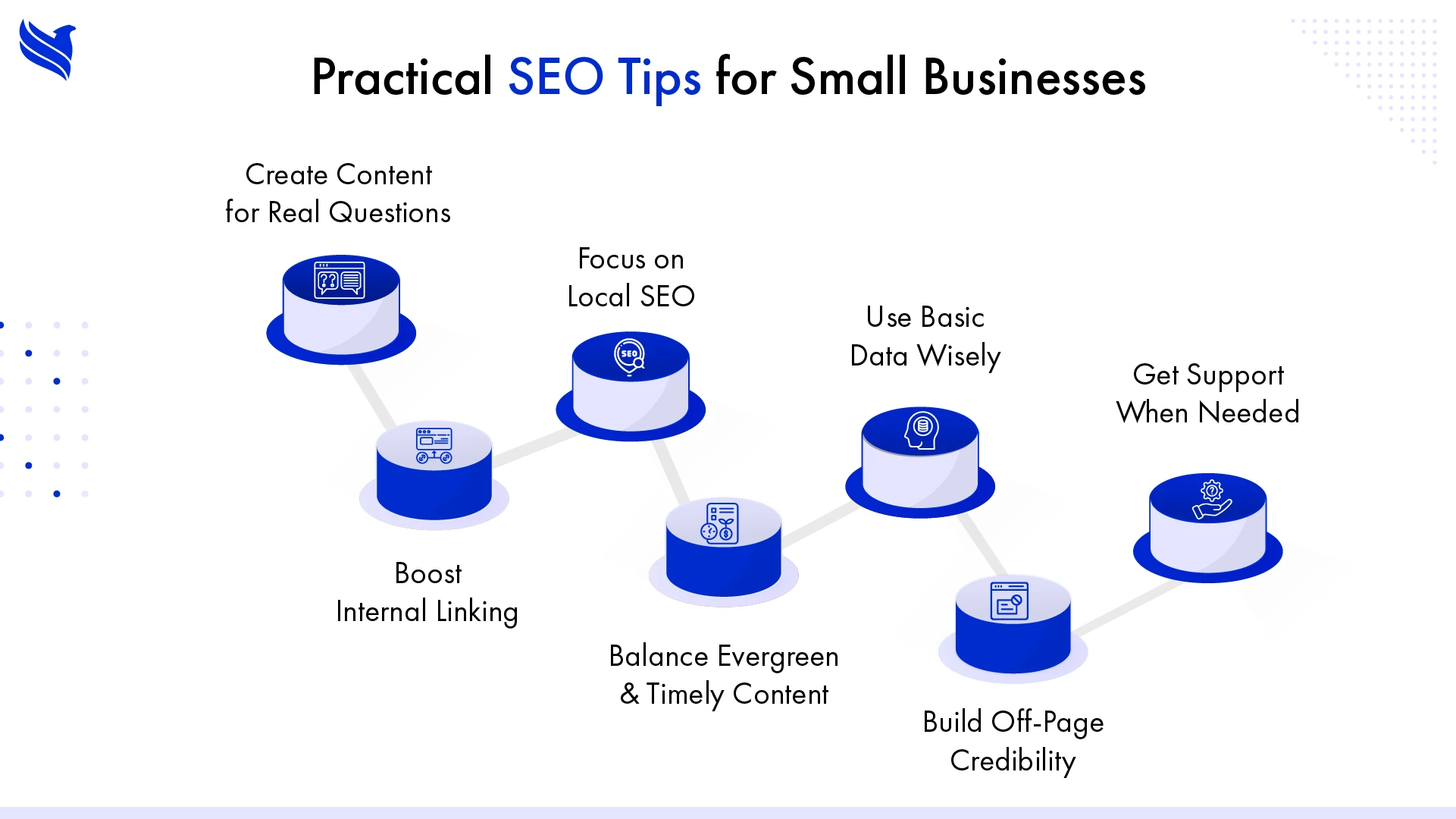
SEO strategies that help small businesses stay competitive
Once the basics and best practices are in place, it becomes easier to look at broader SEO strategies. These aren’t quick tricks but ongoing approaches that shape long-term growth. Small businesses don’t need dozens of strategies; just a few that match how they operate.
- Build content around recurring customer needs: If customers keep asking about pricing, timelines, processes, or specific problems, those topics deserve dedicated pages or short guides. Search engines reward websites that answer real-world questions well.
- Strengthen internal linking: Think of your website like a small town with roads. Some pages get a lot of traffic, while others sit quietly in the corner. Adding internal links helps move visitors, and search engines, to important pages that might not get seen otherwise.
- Prioritize local intent: For many small businesses, local search is the real battleground. Updating local listings, adding neighborhood or service-area pages, and encouraging customer reviews help the business show up to people nearby.
- Mix evergreen content with timely updates: Some posts stay useful for years (how-to guides, service explanations). Others work only for a season or trend. Combining both types keeps the site active and relevant.
- Use data to shape decisions, not overwhelm them: You don’t need complex dashboards. Basic analytics can show which pages bring leads, which need improvement, and what kind of topics customers prefer.
- Strengthen your off-page presence: Good backlinks, partnerships, local mentions, and community involvement signal trust. Even simple collaborations with local groups or suppliers help build a stronger online footprint.
- Consider partial support from SEO outsourcing services: Some strategies demand more time than small teams have. Bringing in outside help, even on specific tasks, can keep the momentum steady.
The goal of these strategies is straightforward: help the website show up for the right people at the right time. When applied gradually and consistently, they support long-term visibility without adding unnecessary complexity.
How social platforms shape modern insurance experiences
In today’s hyper-connected world, social media and online communities have become powerful ecosystems that influence how policyholders discover, evaluate, and engage with insurance services. These platforms are no longer merely communication channels; they have evolved into trust-building hubs where people seek clarity, share experiences, and expect fast, transparent updates from insurers. For insurance providers, leveraging these digital communities is no longer optional; it is a strategic necessity for strengthening brand visibility, humanizing communications, and staying competitive in a crowded marketplace.
One of the most significant advantages social media brings to insurers is real-time engagement. Customers increasingly use platforms like LinkedIn, Facebook, and X (Twitter) to ask questions, report issues, and compare policy options. A prompt and helpful response can significantly enhance brand credibility, while delayed or unhelpful communication can quickly damage perception. Online communities, including review forums and industry groups, also serve as spaces where clients validate decisions based on peer recommendations and testimonials. This peer-driven decision-making has reshaped how insurers must approach customer experience, ensuring they consistently deliver value that can be echoed across digital touchpoints.
Social platforms have also emerged as essential tools for education. Complex insurance terms, policy clauses, and claims processes can be simplified through short videos, infographics, webinars, and Q&A sessions. This content not only empowers customers with better understanding but also positions insurers as accessible advisors rather than transactional entities. As customer expectations evolve, people no longer want just a policy; they want clarity, convenience, and transparency. Social media enables insurers to demonstrate these qualities at scale.
Additionally, targeted advertising allows insurers to reach highly specific demographics based on interests, behaviors, and life events, ensuring marketing budgets are used effectively. Meanwhile, social listening tools give companies visibility into customer sentiment, emerging risks, and competitive shifts, helping them make informed strategic decisions.
Online communities also facilitate collaboration among industry peers, regulators, and service providers. These digital networks encourage knowledge sharing, highlight emerging trends, and accelerate innovation across underwriting, claims, and customer engagement.
In essence, social media and online communities have transformed the insurance landscape into a more transparent, relationship-driven environment. Insurers that harness these platforms strategically can unlock deeper customer trust, accelerate brand growth, and position themselves as leaders in modern insurance engagement.
How AI and automation actually help insurance teams
AI and automation get talked about so much that the words almost lose meaning. Many people imagine huge systems that take months to set up or expensive tools meant only for giant carriers. But in most insurance teams, whether they handle underwriting, claims, policy checking, accounting, or client service, the biggest wins usually come from small, steady improvements. Think of it like fixing small bottlenecks in a busy office rather than trying to rebuild the entire place at once.
Here are a few areas where AI and automation quietly make the day easier:
- Cut down repetitive work that slows everyone: Every team has tasks no one enjoys; entering data from PDFs, sorting emails, matching documents, pulling reports, checking if something is missing. These tasks eat up hours before anyone realizes it. Automation handles these small loops so staff can use their time for decisions, not copy-paste work.
- Make policy and claims reviews more dependable: Insurance files rarely come in the same format. Some are scanned, some typed, some filled by hand. AI tools extract key details and highlight mismatches so the reviewer doesn’t have to scan every line. It doesn’t replace human judgment;; it just removes the noise around it.
- Help teams catch problems earlier: A lot of delays happen because something slips through: an incomplete form, a wrong date, a missing document, a value that doesn't add up. Automation spots these gaps while the file is still fresh, which prevents long back-and-forth emails later.
- Keep data cleaner without extra effort: Most insurers work across multiple systems; CRM, claims, accounting, policy admin, and so on. AI helps keep records consistent by syncing the basics and flagging entries that look unusual. Teams don’t spend time hunting for the “right” version of something.
- Improve turnaround time without burning people out: Fast service matters, especially when customers expect updates quickly. Automation helps things move without forcing staff to rush. It handles the routine parts so humans can handle the tougher ones with a clearer head.
- Support better decisions with simple insights: Not every team needs a giant analytics setup. Sometimes a quick summary, trends in claims, common errors, workload spikes, is enough. AI tools can generate these snapshots automatically, giving managers a clearer view of what’s happening week to week.
What makes these improvements valuable isn’t the technology itself, but the breathing room it creates. When routine tasks take less time, teams respond faster, accuracy improves, and customers feel the difference; all without dramatic overhauls or complicated projects.
Why outside SEO support can ease the load for small teams
Many small businesses try to manage everything in-house, the website, content, social posts, and the long list of SEO tasks that never seems to end. It works for a while, but eventually the routine catches up. Pages go stale; analytics stop getting checked, and small issues slowly pile into bigger ones. That’s usually the moment people realize that SEO isn’t just a one-time setup. It needs steady attention.
Outsourcing some parts of the work gives teams room to breathe. External specialists keep track of search trends, find gaps in the existing content, fix technical issues that most businesses don’t notice, and bring clarity to the entire SEO performance picture. They also help avoid common SEO mistakes that cost time and visibility; things like keyword stuffing, broken links, duplicate pages, or outdated metadata.
For businesses juggling day-to-day operations, handing these responsibilities to a trusted partner means the strategy stays consistent even when workloads spike. It also helps connect SEO with broader digital marketing strategies so the website, ads, and social activity all move in the same direction.
Outsourcing doesn’t replace the internal team. It simply makes the work easier to sustain and far more effective over time.
Bringing it all together for a stronger SEO future
Improving SEO rarely comes from one big action. It’s usually a blend of small habits, clear priorities, and steady maintenance; the same ideas that shaped every section of this guide. From understanding the real challenges small businesses face, to building a practical SEO checklist that fits everyday workflows, the goal has been simple: make SEO easier to manage and easier to sustain.
Strong SEO grows when businesses follow the basics consistently, rely on realistic strategies instead of shortcuts, and stay open to tools that reduce effort. Social communities help amplify reach, AI and automation remove routine tasks, and outsourcing fills the gaps when time or expertise runs thin. When all of these pieces work together, search visibility improves naturally, without forcing teams into complicated processes.
Think of SEO less as a technical chore and more as a long-term system that supports your business every day. With the right structure, even small teams can compete well, stay visible, and attract steady, meaningful traffic.
If you need hands-on help strengthening your SEO or want a partner who manages the heavy lifting, reach out to FBSPL.


Bhavishya Bharadwaj
Bhavishya Bharadwaj is the Digital Marketing Manager at FBSPL, bringing over a decade of experience across insurance, outsourcing, accounting, and digital transformation.
Frequently Asked Questions
Because most customers start their search online. Good SEO helps your business show up when they need you, not after competitors.

.png&w=3840&q=75)