
7 MIN READ·Feb 18, 2026·Written by Bhavishya Bharadwaj

Summary: Monthly bookkeeping services improve effective cash flow management by keeping financial records current and reliable. With accurate reporting, stronger cash flow forecasting, and structured oversight, businesses gain financial stability and are better prepared for unexpected disruptions or market shifts.
See how consistent financial records support financial stability, accurate cash flow forecasting, and better control over daily liquidity.
Why do businesses with steady sales still experience cash shortages?
The issue is rarely income alone. It is usually timing, oversight, or incomplete records. Revenue may look strong on paper, yet available cash may not match obligations. Vendor payments, payroll, tax deadlines, loan installments; these do not wait for receivables to clear.
Research consistently shows that poor cash flow management is one of the leading causes of business failure. Several industry studies indicate that nearly 80% of small businesses struggle due to cash flow issues, even when sales are growing.
When financial records are updated irregularly, small gaps grow unnoticed. Over time, that weakens financial stability.
Monthly bookkeeping services address this directly. They keep transactions recorded, reconciled, and reviewed every month. Instead of reacting to surprises, businesses operate with clarity. Many companies now rely on an experienced accounting & bookkeeping partner to maintain structured reporting without expanding internal teams.
This blog examines why monthly bookkeeping services matter, explores common challenges in cash flow management, and explains how consistent reporting strengthens effective cash flow management.
Before discussing improvement, there must be understanding cash flow.
Cash flow is not profit. It is not projected revenue. It is not expected income. It is actual liquidity; money available to run the business today.
To properly understand cash flow statement reports, attention must be given to three components:
Operating activity reveals whether the core business generates usable cash. In fact, financial analysts often consider positive operating cash flow for multiple consecutive months as a key indicator of operational health. Investing activity shows how funds are allocated toward assets. Financing activity reflects borrowing and repayment patterns.
If these areas are reviewed once a year, the picture is incomplete. Monthly bookkeeping services ensure that cash flow statements reflect present conditions, not outdated numbers.
Many organizations encounter similar challenges in cash flow management. These problems rarely begin dramatically. They develop gradually.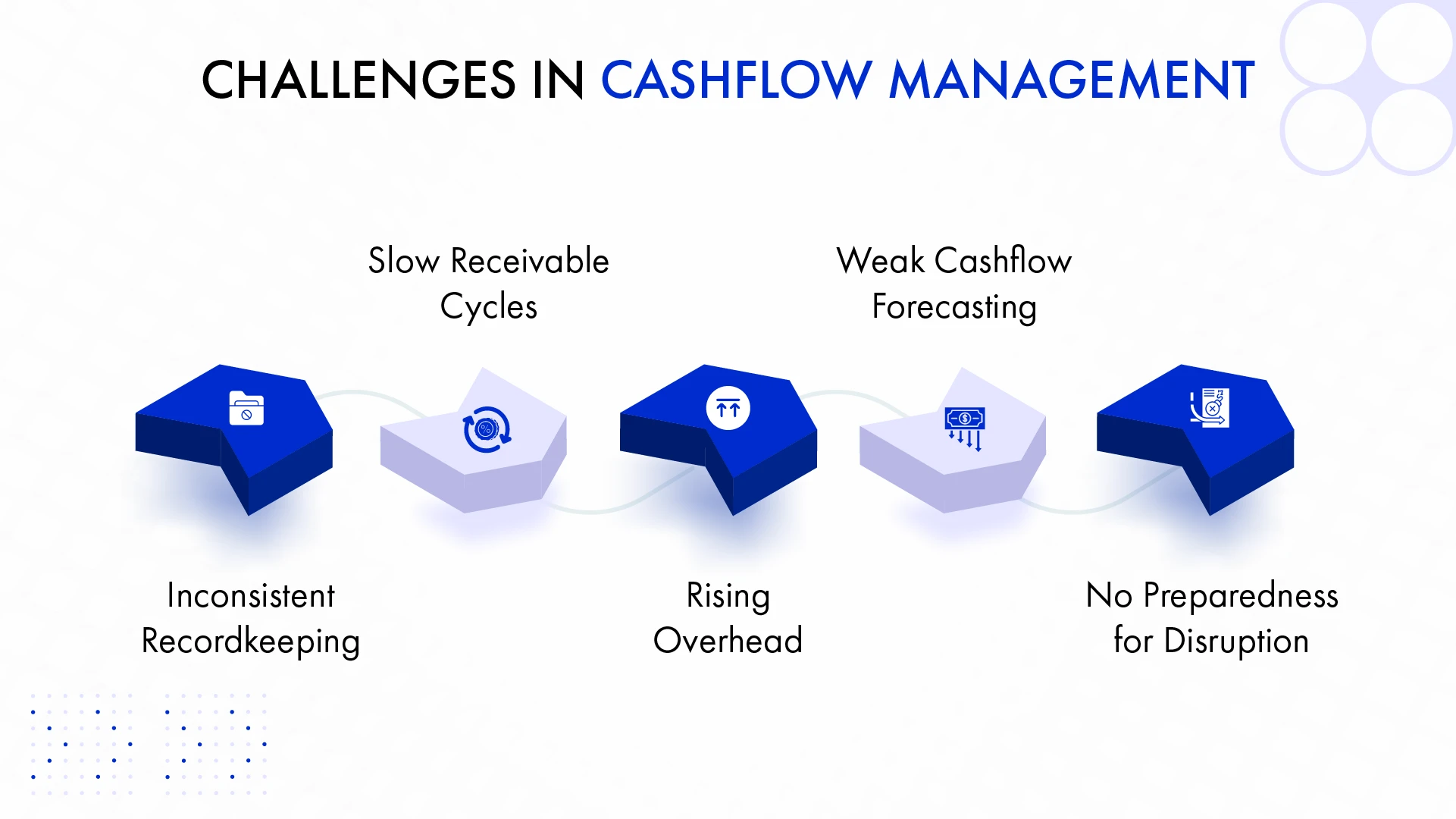
None of these challenges are unusual. They are common when financial reporting lacks structure.
Monthly bookkeeping services create consistency. That consistency improves effective cash flow management in measurable ways.
First, reconciliation happens regularly. Bank balances match accounting records. Credit obligations are visible. Discrepancies are addressed quickly.
Second, reporting becomes routine. Monthly statements provide insight into inflows and outflows. Trends appear earlier, sometimes months before they would otherwise be noticed.
Third, forecasting improves. With accurate historical data, cash flow forecasting becomes grounded in reality rather than assumption. Research indicates that businesses using structured monthly forecasting are significantly more likely to anticipate short-term cash shortages in advance.
Fourth, financial stability strengthens. Liquidity is monitored continuously instead of occasionally.
There is no dramatic shift. The improvement comes from steady oversight.
Markets change. Revenue may dip. Customers may delay payments. Operating costs may rise unexpectedly. When this happens, liquidity becomes critical.
Cash flow modeling to survive market shocks uses existing financial data to test different scenarios. It answers practical questions:
These are not theoretical exercises. They require accurate monthly numbers.
Monthly bookkeeping services provide the baseline required for scenario modeling. Without updated records, projections are unreliable.
An accounting & bookkeeping partner can assist in building these models. The process typically includes:
Organizations that conduct structured scenario planning tend to respond faster during downturns. Adjustments are made before pressure escalates.
Cash flow modeling does not eliminate uncertainty. It reduces vulnerability.
Some businesses prefer quarterly reviews. It appears simpler. In practice, it introduces delay.
Below is a direct comparison:
| Area | Monthly bookkeeping services | Quarterly accounting |
| Transaction updates | Entered and reconciled monthly | Accumulated over three months |
| Error detection | Corrected early | Often discovered late |
| Cash flow forecasting | Based on current data | Based on older figures |
| Liquidity awareness | Ongoing visibility | Periodic review |
| Financial stability | Actively monitored | Reactively addressed |
| Administrative pressure | Distributed evenly | Compressed workload |
Quarterly accounting tends to create backlog. Adjustments become urgent rather than planned.
Monthly bookkeeping services distribute the workload and improve clarity.
Improving effective cash flow management does not require dramatic restructuring. It requires discipline.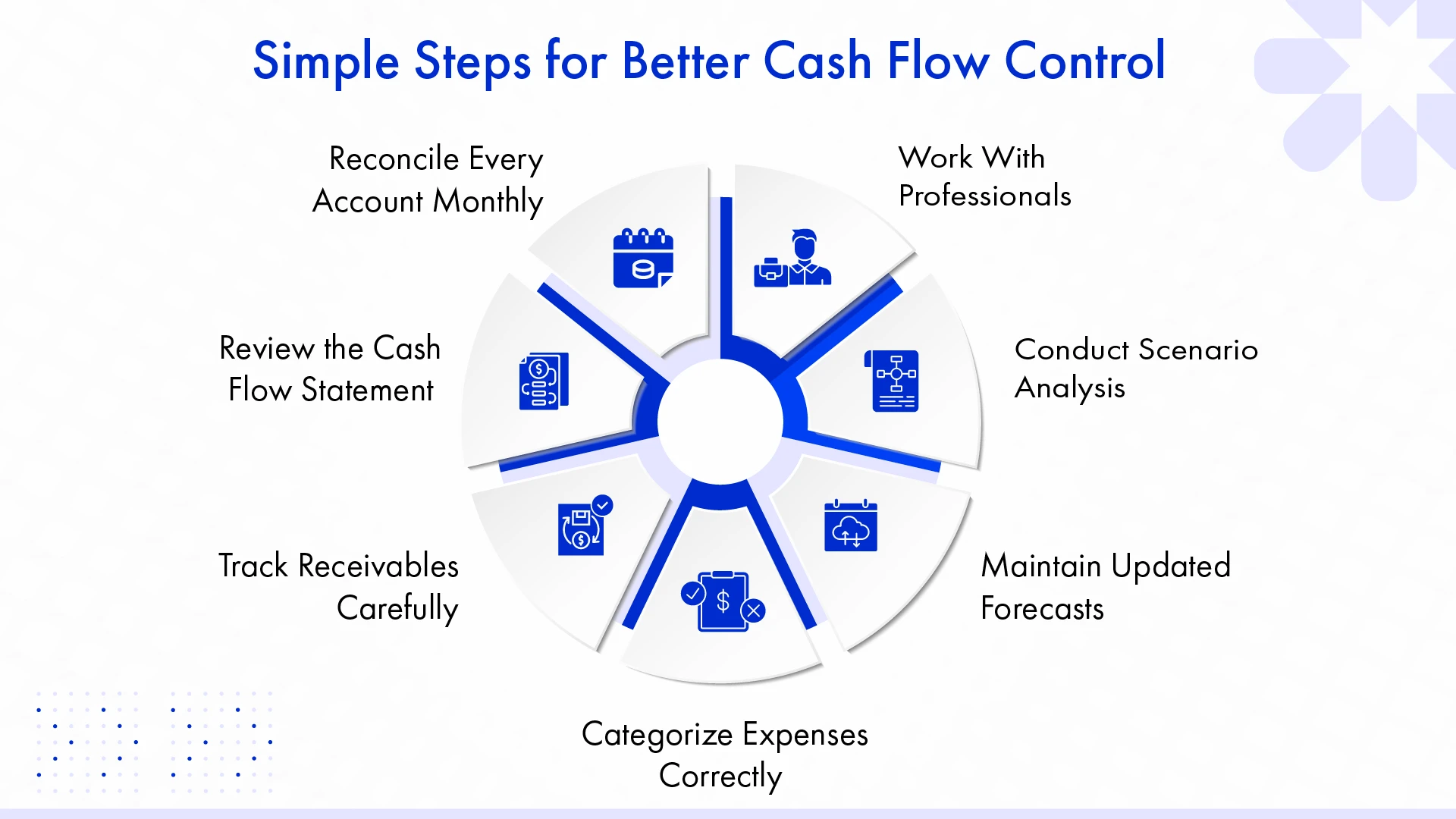
None of these steps are complex. The value lies in consistency.
Internal teams often juggle operational priorities. Financial reporting becomes secondary. Over time, that creates gaps.
An accounting & bookkeeping partner ensures regular oversight. Professional accounting & bookkeeping services provide:
Outsourcing also introduces objectivity. Financial data is reviewed without internal bias.
For growing businesses, this support contributes directly to financial stability.
The advantages extend beyond daily liquidity.
Consistent monthly bookkeeping services help with:
Financial clarity supports measured decision-making.
Effective cash flow management does not depend on occasional review. It depends on regular, disciplined tracking.
Cash shortages rarely begin suddenly. They develop through delayed collections, unnoticed expense growth, and irregular reporting.
Monthly bookkeeping services reduce that risk. They strengthen effective cash flow management, improve cash flow forecasting, and support financial stability. With accurate monthly records, businesses can Understand cash flow statement trends clearly and perform cash flow modeling to survive market shocks with greater confidence.
For organizations looking to build stronger liquidity control and structured financial oversight, partnering with an experienced accounting & bookkeeping partner such as FBSPL can provide dependable accounting & bookkeeping services tailored to business needs. Consistent monthly bookkeeping services lay the groundwork for long-term financial stability and confident growth.
Get the latest insights on insurance operations, policy management, and industry best practices.