
5 MIN READ·Feb 12, 2026·Written by Bhavishya Bharadwaj

Summary - Insurance operations face growing pressure from rising volumes, tighter timelines, and higher client expectations. Intelligent automation and AI tools now help agencies reduce manual effort, improve accuracy, and accelerate workflows; allowing teams to focus on advisory roles, customer relationships, and long-term business growth.
Manual insurance processes can’t keep up with 2026 demands; AI and intelligent automation now drive faster, smarter, and more reliable operations.
Have you ever wondered why some agencies still spend hours; sometimes days; poring over stacks of policy documents, manually checking endorsements and coverage details, or painstakingly assembling proposals from multiple carriers? In 2026, that painstaking manual grind feels less like “industry standard” and more like “industry liability.”
The truth is stark: insurance automation isn’t optional anymore; it’s a business imperative. Insurers who stick with legacy manual workflows are increasingly stretched thin by rising customer expectations, skyrocketing volumes of policies and claims, and intense competitive pressure to perform smarter, faster, cheaper. And thanks to intelligent automation in insurance and AI-based tools, there’s now a way forward that doesn’t just cut costs; it unlocks real operational transformation.
At its core, intelligent automation in insurance is a rule-based automation with AI-driven capabilities such as natural language processing (NLP), machine learning, and predictive analytics to execute and streamline tedious, information-heavy tasks that once required manual human effort.
This isn’t just about robotic task execution. It’s about AI-augmented decisioning, real-time data extraction and validation, intelligent document processing, and automated workflows that:
In essence, automation in the insurance industry transforms the traditional back office into a high-velocity, data-driven operational engine.
By now, the industry has real evidence showing that insurance process automation delivers measurable performance gains: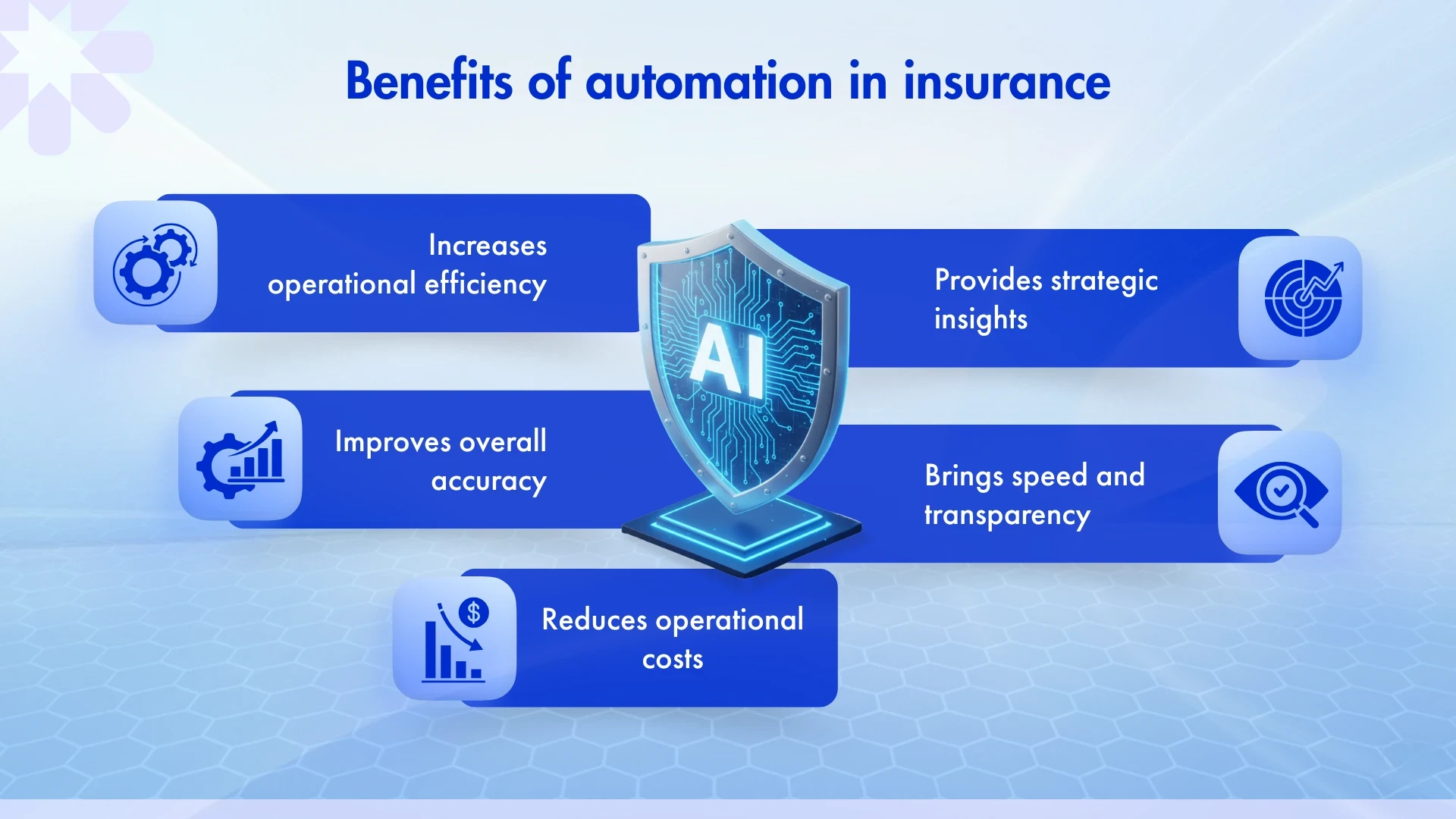
These benefits underscore why automation isn’t a “nice-to-have” anymore; it’s a competitive edge.
Even with powerful tools on the table, intelligent automation in insurance isn’t plug-and-play. Insurers face real hurdles, including:
So, what does this mean for agencies that want to move beyond today’s constraints and thrive in 2026? At FBSPL, we believe the answer lies in purpose-built automation tools; designed to handle real insurance workflows, deliver repeatable results, and free human talent for high-value work. Let’s take a look: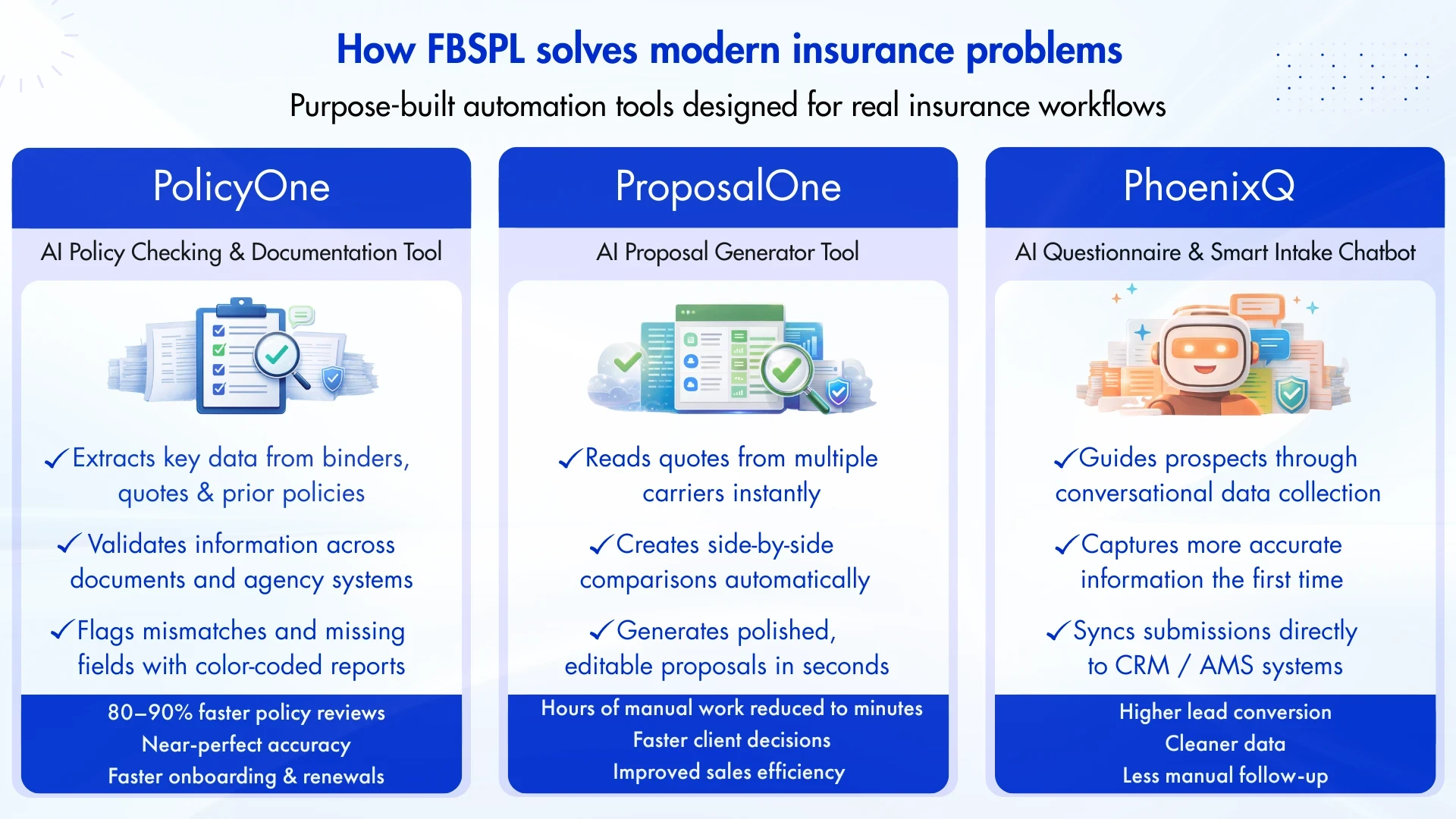
This tool radically simplifies the traditionally manual process of policy review. It uses AI to:
It cuts policy review times by up to 80-90%, boosts accuracy to near-perfect levels, and helps agencies accelerate onboarding and renewals.
No more manual formatting, comparing spreadsheets, or juggling multiple quote documents. ProposalOne:
This is insurance automation that turns hours of work into clicks, improving sales efficiency and client experience.
PhoenixQ reimagines client intake with conversational AI. Instead of static forms:
The result? Higher lead conversion, more accurate data, and less manual follow-up.
Organizations exploring smarter ways to modernize their operations can also experience these capabilities firsthand through a one-month pilot access. This allows teams to see how intelligent automation performs in real-world insurance workflows, evaluate efficiency gains, and understand the practical impact before making longer-term decisions.
Insurance operations are becoming faster, more data-driven, and more customer-focused than ever before. Manual processes that once worked are now slowing teams down, increasing risk, and limiting growth. Intelligent automation in insurance is no longer a future concept; it is the foundation of efficient, scalable, and modern operations.
Organizations that act now will not only reduce operational pressure but also create room for teams to focus on advisory work, client relationships, and strategic expansion. The shift toward insurance automation is already underway across the industry, and those who adapt early will lead the way.
At FBSPL, we’re helping insurance businesses make this transition with practical, purpose-built automation tools designed for real operational challenges. If you're exploring how to streamline workflows, improve accuracy, and unlock team productivity, our experts are ready to guide you through the possibilities.
Get the latest insights on insurance operations, policy management, and industry best practices.