
1 MIN READ·Feb 13, 2026·Written by Bhavishya Bharadwaj

Summary: Employee benefits administration has turned into year-round work for agencies. Ongoing updates, employee changes, and enrollment spikes make the workload harder to manage. Benefit administration services and outsourcing benefits administration help Improve efficiency, reduce errors, and maintain consistent support without adding strain to internal teams.
Employee benefits now require steady oversight, careful recordkeeping, and reliable support to prevent delays, confusion, and compliance risks from growing.
Why has benefits administration become one of the most time-consuming responsibilities for agencies today?
Not long ago, benefits work followed a predictable cycle. Enrollment season would arrive, paperwork would be processed, and the pace would ease again. That pattern doesn’t exist anymore. Now the work continues throughout the year. New hires need enrollments. Payroll adjustments must be made. Compliance notices arrive without much warning. Employees have questions that need clear answers. What looks like a background function has quietly turned into an ongoing operational demand.
Employee benefits administration now connects multiple systems, deadlines, and regulations at the same time. When even one detail slips through, the impact travels fast. Coverage errors, delayed deductions, reporting gaps; these issues rarely stay isolated. Because of this, many agencies have begun exploring outsourcing benefits of administration as a practical step toward stability.
In this blog, the focus is on the real challenges in benefit administration, what dependable benefit administration services include, and how agencies can Improve efficiency without adding pressure to internal teams.
Benefits management is no longer limited to annual enrollment periods. It now runs alongside hiring cycles, payroll schedules, life events, and regulatory changes.
Every new employee starts a chain of administrative tasks. Marriage, dependents, or coverage changes create additional updates. Payroll deductions must match benefit selections accurately, and carriers require current information at all times. Compliance deadlines don’t wait for busy schedules.
For agencies without dedicated staff benefits management and administrators, these tasks are often handled by general HR staff. The work still gets done, but it’s usually squeezed between other responsibilities. Over time, that pressure increases the chance of errors or delays.
The challenges in benefit administration tend to appear in similar ways, no matter the agency’s size.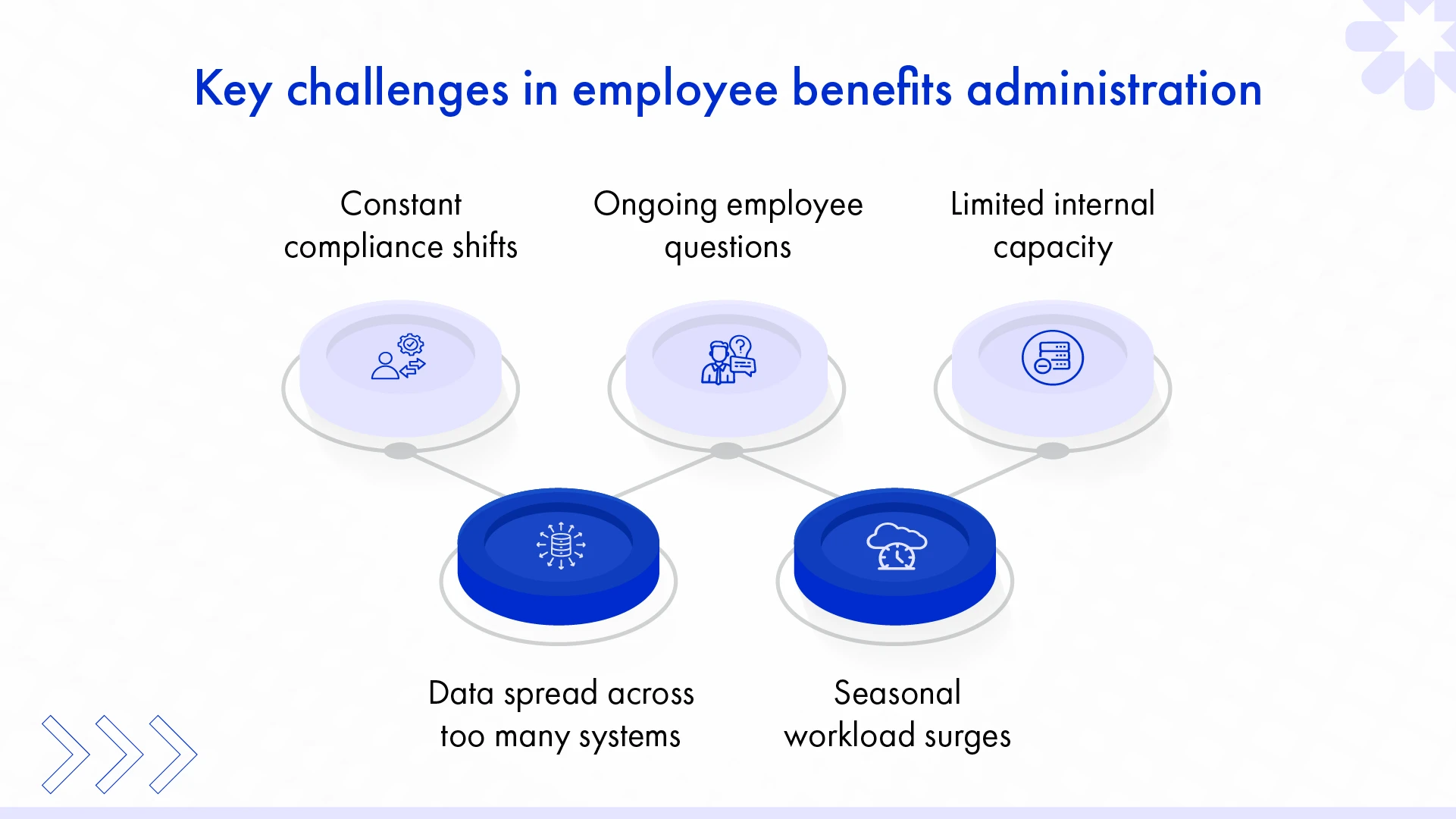
Benefits regulations do not remain steady. Contribution limits change, reporting formats evolve, and eligibility rules get revised. Missing a single update can create financial or legal exposure. Industry data suggests that nearly one-third of small and mid-sized organizations face compliance issues tied to benefits at some point. Most situations arise from oversight, not intentional neglect.
Benefits information often sits in several places at once; payroll platforms, HR systems, and carrier portals. If data isn’t updated everywhere, mismatches occur. Something as simple as an outdated dependent record can lead to incorrect deductions or claim problems. Manual processes make this harder to control, especially as volumes increase.
Benefits are important but can be confusing. Employees regularly ask about plan comparisons, eligibility, and coverage updates. Without structured employee benefits services, these questions build up quickly in HR inboxes. Delays create uncertainty, especially during open enrollment periods.
Open enrollment rarely arrives gradually. Forms, updates, and employee questions appear all at once. Workloads can rise sharply in a short time. Smaller HR teams often find themselves rushing to meet deadlines, and fast work leaves more room for mistakes.
In benefits administration for small business, staffing is often the biggest hurdle. There may not be a dedicated specialist for benefits. Responsibilities are divided among team members who already handle hiring, onboarding, and employee support.
When agencies seek support, they often discover that benefit administration services cover a broader range of responsibilities than expected.
These services manage the day-to-day activities involved in employee benefits administration, such as:
Many providers rely on integrated systems that connect payroll and HR platforms, reducing duplicate entries and helping maintain data accuracy. Alerts and tracking tools help monitor deadlines and incomplete tasks.
For benefits administration for small business, this approach offers access to trained professionals without increasing internal staffing levels. Some of the top benefits administration companies also provide reporting tools and audit support, giving agencies added confidence during compliance reviews.
Quality in employee benefits support depends on structure and experience, not just technology.
Documented processes make tasks consistent. Clear steps for enrollments and updates reduce confusion. Experienced staff benefits management and administrators bring practical understanding of plan structures, payroll coordination, and compliance requirements.
Routine checks also play a role. Reviewing records and deductions regularly helps identify discrepancies before they grow. Accessible employee support improves the overall experience by directing questions to the right place quickly.
Organizations that adopt these practices often see a steady decline in administrative errors over time.
Seasonal enrollment periods create pressure that many internal teams struggle to absorb. Providers offering employee benefits outsourcing prepare for these spikes.
Flexible staffing models allow additional administrators to step in during peak periods. Digital tracking systems help organize requests so fewer tasks are missed. Because outsourcing partners manage benefits for multiple clients, they build systems designed for high-volume processing.
Agencies gain the benefit of that structure without having to temporarily expand their own workforce.
The decision to pursue outsourcing benefits administration often begins with workload concerns but leads to broader operational improvements.
Administrative pressure eases, giving HR teams more time to focus on workforce planning and employee engagement. Consistency improves when dedicated teams handle tasks within structured Employee benefits services environments. Scalability becomes more manageable, as outsourcing models grow alongside workforce size.
Studies suggest organizations using structured Employee benefits outsourcing can Improve efficiency in benefits administration by up to 30 percent. Even benefits administration for small business becomes more manageable when specialized systems and expertise are available externally.
Benefits programs play an important role in employee support, yet managing them has become increasingly complex. The ongoing challenges in benefit administration; compliance changes, data coordination, communication demands, and seasonal surges; are unlikely to slow down.
Agencies that combine clear processes, trained staff benefits management and administrators, and dependable benefit administration services create a more stable foundation. For many, outsourcing benefits administration adds the consistency and flexibility needed to maintain quality while allowing internal teams to focus on broader priorities.
Organizations looking to strengthen their employee benefits services and Improve efficiency without increasing internal strain can benefit from experienced external support.
FBSPL provides structured, reliable employee benefits outsourcing designed to help agencies manage employee benefits administration with greater confidence and control.
Get the latest insights on insurance operations, policy management, and industry best practices.