

Every lasting organization begins with a belief before it ever becomes a business. In this milestone episode of “Built for Impact”, the journey turns inward; to the roots of FBSPL and the vision that shaped it from day one.
Our host, Japniwaz Kaur, sits down with Madhukar S. Dubey, Founder and Managing Director of FBSPL, to trace the story behind the company’s beginnings in Udaipur and its evolution into a global BPM consulting firm. Long before scale, systems, or structure, there was conviction; to build something meaningful in a city better known for tourism than technology.
Through candid reflections, Madhukar Sir shares what it took to start from a single room, face years of uncertainty, and persist through financial pressure, talent challenges, and moments that nearly broke the journey. The conversation explores the realities of entrepreneurship in a non-metro city, the role of belief when resources are scarce, and the turning points that helped transform effort into sustainable growth.
This episode is not just about building a company. It is about building resilience, culture, and systems that outlast individuals. It offers listeners an honest look at leadership shaped by responsibility, people-first thinking, and the courage to evolve when growth demands change.
Japniwaz Kaur: Now that takes me to the next question. What was the vision when you started?
MD Sir: See frankly, there was only one vision, to create something in Udaipur, to create something beautiful story from Udaipur for the world. I belong to Udaipur, my parents belong to Udaipur, my mother especially. And I could have started this company in Bombay and Bangalore, where I was earlier, before Udaipur.
But I was being raised here by my maternal grandmother, and I love this city. I love the vibe of this city. It was a small city at that time, now it's gone big, and I'm very proud of that too.
And it was to just create something out of Udaipur. I wanted to create IT, because Udaipur was known for tourism, for marble, mineral, like that, but I wanted to create something in terms of IT, and it's a beautiful, beautiful something we did it.
Japniwaz Kaur: I cannot doubt that even in IOTA, I am sure this is a very beautiful city.
MD Sir: Yes.
Japniwaz Kaur: Like we were talking about Udaipur, you did mention that you had your childhood in other cities. Why Udaipur? What brought you so close to Udaipur, from it being big cities to coming to small cities and bringing it to global?
MD Sir: See, to be very transparent and honestly, I was missing Udaipur. One thing, I missed my friends and relatives from here. I never studied here.
I was there in my primary classes here, but after that I went to Jaipur, Bombay, Bangalore, all those cities. A few of us friends, we started to plan in Mumbai, but I was there in between my studies and college few years here in Udaipur. And I saw a huge gap that the youth was not staying here.
Anybody who was doing a graduation or something or engineering, they were not able to find any good company. Yes, there was a few good companies like Secure was there, Hindustan Zinc was there, RSMM was there, but not private organizations like small ones where these engineers can be consumed or, you know, graduates can be consumed. And I thought, I will do something here.
And then one guy said, hey, in Udaipur nothing can happen, it's only for tourism, you will not find people. And I said, no, I will do it. I will do it because, first of all, for the love of this city.
And second, you know, I knew very well if I start something in Bombay or Bangalore, I will be just another outsourcing company. But here, look at, after all these years, so many youth is staying here in Udaipur. They are finding good jobs, they are able to build their homes, they are buying cars, they are traveling overseas, all thanks to this IT.
And yes, we kind of started it, but look at how many companies are there now, how many people are getting jobs, and it is coming out to be a very beautiful story.
View Transcript

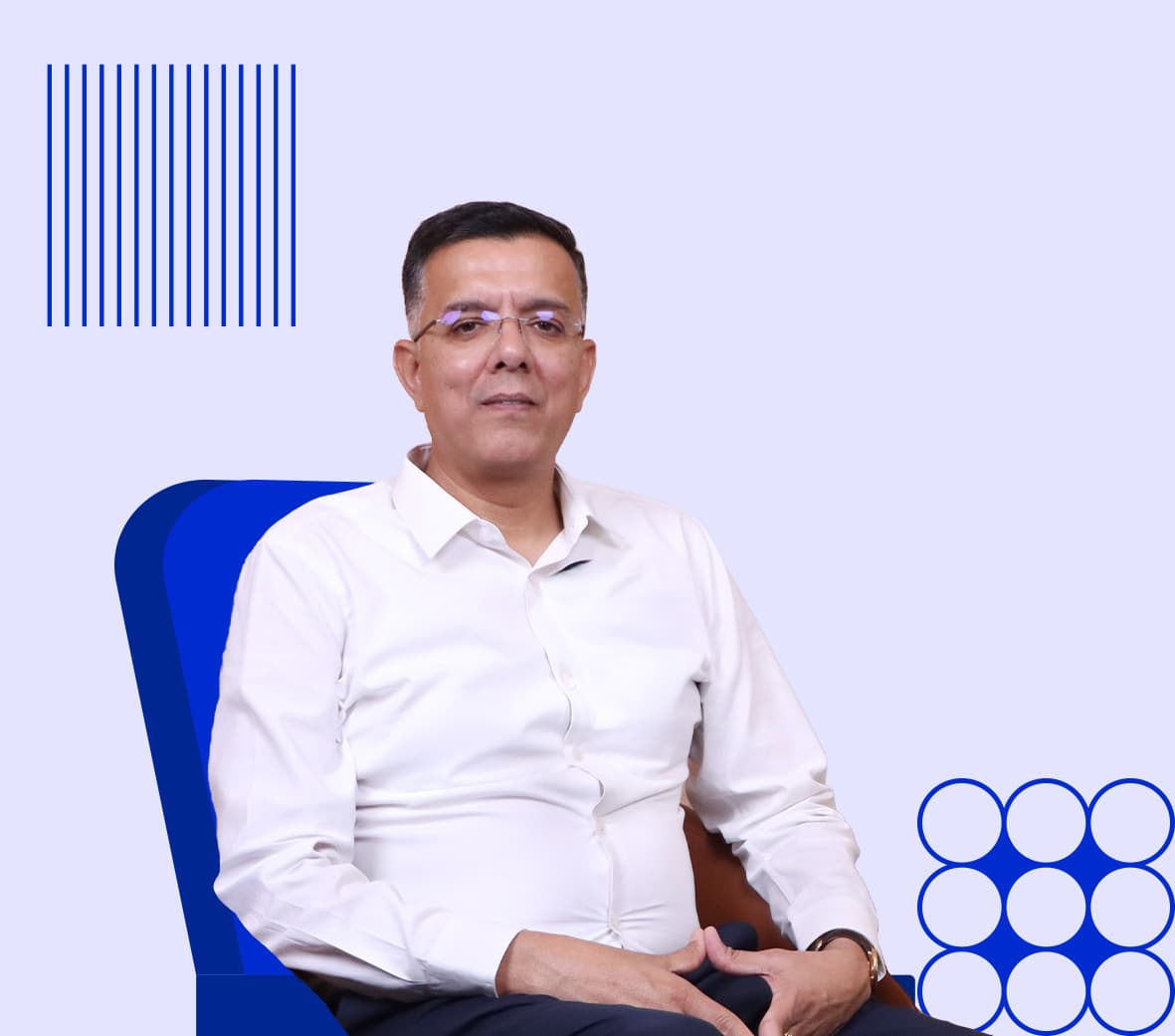
Madhukar S Dubey is the Founder and Managing Director of FBSPL. With a deep belief in solving real business problems through structured processes and long-term thinking, he has spent more than two decades building teams, systems, and partnerships that enable sustainable growth.
Known for his clarity of vision and data-informed approach, Madhukar Sir brings together technology, operations, and people leadership to help businesses scale with confidence. His journey reflects the realities of first-generation entrepreneurship; learning through experience, embracing discipline, and continuously evolving leadership to meet the demands of growth.
At the core of his philosophy is a strong commitment to conversation-led problem solving, where understanding business pain points, aspirations, and direction matters as much as delivering results. Under his leadership, FBSPL has grown into a culture-driven organization where resilience, ownership, and belief shape both people and performance.

Japniwaz Kaur: When we started ‘Build for Impact’, the idea was simple. It was to bring forward the stories that built people, companies, and the change itself. In the past few episodes, we've met incredible leaders, creators, thinkers, and all of them have shared how Impact is not born from comfort, but from conviction.
And today, we are taking the story back home, where Build for Impact itself began, inside the walls, the vision, and the heartbeat of Fusion Business Solutions, or as we proudly call it, FBSPL.
This episode is special, because for the first time, we have with us the man behind the mission, the founder who dreamt of a global company from a small city of Udaipur. Long before the startups were even a thing, Mr. Madhukar Dubey, the managing director of FBSPL, a visionary, a mentor, a leader who's turned grit into growth and chaos into a beautiful culture.
In this episode, we will uncover what it really took to scale a dream from Udaipur to the world. Now, let's keep the ball rolling. So, let's talk about that day when FBSPL began. That one room, some handful of people, what did it feel like and how did it look like to you?
MD Sir: It was chaos, excitement, and innocence all together. Me trying to do something in Udaipur, few people with me. I still remember there was only one person when I started this company, Dinesh Narda. Him and me were there. So, it was a mix of all chaos, excitement, innocence. People never knew about BPO, they knew about developing software, but nobody knew, in terms of Udaipur, about outsourcing.
And probably, not probably, I'm very sure that this is why a lot of people tell me, you know, Fusion is the one which kind of started the outsourcing industry from Udaipur. Before that, there were some companies who were developing software or websites for local companies, but nothing like outsourcing or dollar or euro income like that. So yeah, I still bring a smile to my face whenever I remember that day.
Japniwaz Kaur: I am sure you must be very proud of that.
MD Sir: Yes.
Japniwaz Kaur: Now that takes me to the next question. What was the vision when you started?
MD Sir: See frankly, there was only one vision, to create something in Udaipur, to create something beautiful story from Udaipur for the world. I belong to Udaipur, my parents belong to Udaipur, my mother especially. And I could have started this company in Bombay and Bangalore, where I was earlier, before Udaipur.
But I was being raised here by my maternal grandmother, and I love this city. I love the vibe of this city. It was a small city at that time, now it's gone big, and I'm very proud of that too.
And it was to just create something out of Udaipur. I wanted to create IT, because Udaipur was known for tourism, for marble, mineral, like that, but I wanted to create something in terms of IT, and it's a beautiful, beautiful something we did it.
Japniwaz Kaur: I cannot doubt that even in IOTA, I am sure this is a very beautiful city.
MD Sir: Yes.
Japniwaz Kaur: Like we were talking about Udaipur, you did mention that you had your childhood in other cities. Why Udaipur? What brought you so close to Udaipur, from it being big cities to coming to small cities and bringing it to global?
MD Sir: See, to be very transparent and honestly, I was missing Udaipur. One thing, I missed my friends and relatives from here. I never studied here.
I was there in my primary classes here, but after that I went to Jaipur, Bombay, Bangalore, all those cities. A few of us friends, we started to plan in Mumbai, but I was there in between my studies and college few years here in Udaipur. And I saw a huge gap that the youth was not staying here.
Anybody who was doing a graduation or something or engineering, they were not able to find any good company. Yes, there was a few good companies like Secure was there, Hindustan Zinc was there, RSMM was there, but not private organizations like small ones where these engineers can be consumed or, you know, graduates can be consumed. And I thought, I will do something here.
And then one guy said, hey, in Udaipur nothing can happen, it's only for tourism, you will not find people. And I said, no, I will do it. I will do it because, first of all, for the love of this city.
And second, you know, I knew very well if I start something in Bombay or Bangalore, I will be just another outsourcing company. But here, look at, after all these years, so many youth is staying here in Udaipur. They are finding good jobs, they are able to build their homes, they are buying cars, they are traveling overseas, all thanks to this IT.
And yes, we kind of started it, but look at how many companies are there now, how many people are getting jobs, and it is coming out to be a very beautiful story.
Japniwaz Kaur: Indeed, it is. You started painting a canvas that was pure white and we have painted a very rosy picture. However, that makes me take to the next question.
Whenever you start painting, there are tough parts. What do you think were tough? Was that the people, was that the money or the beliefs?
MD Sir: It was all. It was all. See, once you start something in Udaipur, people don't trust you so easily.
Something new. It's always, we have this, that if you start something new, people don't trust you. But one thing I have been very lucky, whomsoever started working with me, whomsoever I hired, I will use the word hired, initially, they believed in me.
They said, yeah, this guy is doing something, let's follow him. And yes, money was not there at all. At that time, raising, even, forget about venture capital or seed fund or whatever those words are, even raising a loan was so difficult.
I still remember my first one lakh rupee loan, for that I had to attend an orientation course of 15 days that was Pradhan Mantri Rojgar Yojana, something like that. And it was difficult. But see, one thing I know and one thing I strongly believe is in God.
If your intentions are right, if you are honest and if you are transparent, God will show you the way. It will send people, it will send ways, messages that you need to just believe in it and keep walking.
Japniwaz Kaur: I am sure this might have taken a lot of courage in you and also belief in yourself and your potential. However, were there any days or were there any moments when you thought of giving up and what kept you going forward?
MD Sir: If I say when, it was not. Every day was a new day. Every day was a challenge.
Yes, there have been many times where I say, no, it is not working out. I literally, you know, say resigned myself. I said, no, it is not going to happen.
But next day when you wake up and you say, no, I am not going to lose. I am not going to lose myself and let my team down because of me. And let my family down, especially.
Once you know you have a family, my wife, my kids, my parents, when you see them, you see a lot of hope. You see, these people believe in you and as a family, they will always believe in you. But there are people who are working in your office, they believe you will be paid on time.
They believe in your vision. They believe this company is going to do big and beautiful things and that kept on going. That kept on going.
Multiple times, there was time when I didn't have the money to pay them on a fixed date. But God being kind, he did his magic every time, every time. That's true.
And you know, I am so glad he is there, he is there always.
Japniwaz Kaur: That's a sheer example of conviction, I must say that. Now I would be moving on to the next type of questions. Let's go back and talk about the years between 2006 to 2018.
I am sure they were tough. There were slow growth, maybe limited revenue, also constant uncertainty. What was that period really like from inside?
MD Sir: If I make a movie out of those, it will be a 12-year grind. See, one thing I can tell is the enthusiasm was never weak. I kept on believing, everybody kept on believing, we kept on going, every day was a new day.
You know, there have been days when a client just left overnight, he just blocked our access and he just vanished. There were times when the bills were due and the client just filed for bankruptcy. There was time when I could see after one or two months there will be no business.
But we kept on going. I can say it was 12,000 MBAs in those 12 years. You learn about people, you learn about business, you learn about growing, you learn about humility, you learn about accepting what is being thrown at you.
And one of the most beautiful things I learned is when your time is not right, bow your head down and keep working, keep working, don't shout. Because shouting doesn't solve anything. Only the work, your work will speak, your work will produce something.
Japniwaz Kaur: While all of this was happening around, I'm sure there was this one day when you felt that it's almost fell apart. What and how did you turn that around?
MD Sir: Frankly, my wife and my kids smiled when there have been few days where I couldn't see the next day sunlight. It was just not possible to see. But when I went home, Shweta was waiting.
My son was born in the very first year of our marriage. He was there. Papa, papa, like that.
So it keeps you motivating and your team. And you know, many times when I felt, oh, now we don't have anything, you know, somebody will come up. Hey, sir, listen, I got a new lead.
Hey, sir, you know, we were marketing this. Why don't we market this also? Sir, I was talking to this client and he has something for us. But I don't, we don't have the expertise. But we were like, we will do it. We have done so much.
Why don't we do? So my team was with me. Rohit Gupta was there, Dheeraj was there, Kuldeep Bhatnagar was there, Himkar was there, you know, more importantly.
So these people keep on coming with new ideas, something. And sometimes, you know, as an entrepreneur, you're always thinking something, you're always thinking of planning something. So things keep popping up.
And glad they worked. I'm very glad they worked, otherwise we wouldn't have been here, you know, things would have been very different.
Japniwaz Kaur: Absolutely. And I'm glad that you remember the people, those who stuck by you all this while. And while you were in this challenging phase, what were those lessons that you learnt about maybe leadership, the people and the resilience?
MD Sir: See, the most important thing you should have is resilience. Never give up attitude. One thing I keep telling everybody and I like to tell you too, never have second options.
Never have second options in your life. You always have a backup plans or something, but from the same business. Sometimes I have seen why people fail is because they are trying to do four or five multiple things.
Once you are so distributed, you cannot focus on something, one thing, you know. My rule is focus on one thing. Don't think about anything else.
And yes, it will sooner or later. There will be failures. There will be a lot of learning.
And those learnings are very important. As an entrepreneur, you are a first generation businessman. You don't know anything and everything.
You will keep learning. You will fall. You will walk again.
You will fall, but you will start running. That's resilience should be there that you should not have second options and you keep on going towards one aim, one target, one dream.
Japniwaz Kaur: So if I talk about the young people today, one constant thing I get to hear a lot is whenever they they're not able to stay committed to the entire goal, whenever you fell down, like you were talking about it, like you fell down, who or what kept you going or who pulled you out of that or what pulled you out of that situation?
MD Sir: All the time it is he or she, whomever he or she is, keep on showing us, you know, with either in my sweet smile on my sign smile on my my team members smile. They believe in me and I believe in them. It's when you have nothing, you only have God and the belief and you keep moving on that.
You keep the there have you know, I still remember one day when I knew I have to run salary after two days and we didn't have the money because, you know, earlier we didn't have the money. Only when client used to pay us, then we used to run our payroll. So and the client went on a holiday and I knew he already informed me none of his fault.
And he said, Madhu, I will be back by 15 and I will send you once I'm back. And I was like, I need to pay my guys on sixth of every month or fifth or sixth on every month. But guess what?
There was one guy who was a friend of mine who came and he saw me in a very puzzled situation. He said, what happened, Madhu? I said, I need to run my payroll in three days and I don't have the money, man.
And he said, I have, take it from me. And I was like, he's not from, you know, from that comfortable of a family. I said, how come you have?
He said, I applied for a car loan, that car loan sanction. They have transferred in my account. So you take it for, I will buy a car after four or five days.
So should I call him a friend or should I call him a God? I think that he was like God to me that day and he still is. I still respect that guy a lot.
Japniwaz Kaur: It takes an army to grow one man into a vision, into an entire organization, of course. But then like you were talking when you started, you were the first generation entrepreneur and I'm sure that there have been a lot of learnings that you had. When you began, what was that one thing that you thought was missing?
Was that the mindset, the system or the direction?
MD Sir: See, direction was always there. I kind of knew what I need to develop, what I need to, where we need to be. But systems were not there.
It was a lot of energy. Like, it was like, you know, how we call it, tum mujhe khoon do, main tumhe azaadi doonga. It was like whatever Madhukar sir is saying, let's keep on doing.
But sometimes Madhukar sir is not capable of developing processes. He doesn't know how to develop SOPs because I'm more of a, from a tech background, not from a management background. So processes were missing.
We were not able to sustain what we were doing because the processes were not there. Something failed, we left it, we moved to something else. We never realized what was going wrong.
So once we started developing these processes with the help of our partners and consultants, things started moving in a very different way. There, we kind of realized where we were missing out. And frankly, I do regret not developing those processes well in time.
Otherwise, fusion would have been like more than a double of what we are right now.
Japniwaz Kaur: See, there's never an end of the road. That is a learning that we had. And, you know, we were talking about the 12 years of grind.
Now let's talk about the good days that ultimately after those SOPs that we have, we are watching and observing today. Something shifted after 2018. Fusion picked up a momentum.
What actually changed?
MD Sir: There were multiple points at that time. One thing is my brother, who was with me in this business, used to run operations. We kind of parted our ways.
He wanted to do something else, so he moved on. And I was finding it really hard how to manage all this because I'm more of a tech background and marketing kind of guy, not operations kind of guy. And I attended a management course run by Mr. Vinod Verma, whom we all in Fusion now know as the granddaddy of Fusion. So I attended his management course and kind of realized he's the one we need in Fusion, who can help us develop our SOPs, processes, systems, and data insights. So he kind of came on board as a consultant. And he realized one very important and beautiful thing, one of the most beautiful things he realized, that my wife is more capable in operations than anybody else around.
So Shweta joined us. And it was not 2018, around 2017 she joined. And things started changing from there.
We started looking at our operations or anything as data, not as some mission or some war or whatever. We started looking at everything as data, as dashboards, as processes. Once that kind of started happening, things started moving in a very different direction.
Like when he came to our office, he kind of realized our recruitment process was not deep. It was not foolproof. Okay, do you know Excel?
Do you know Word? Okay, can you do a few things? Okay, you are on board.
He kind of realized this is not going to work. So he changed the recruitment process. And if you look at Fusion's recruitment process, it is one of the most strict and followed up.
And it is, you cannot cross it. No matter what. Even if somebody is my brother or cousin who wants to join Fusion, he has to go through that.
And until he doesn't go pass or complete those interviews, he cannot be on the floor. And then the training came. He developed the training.
Like anybody whom we recruit go on for more than 30 or 45 days of training. Then only he gets on the floor. I don't see many companies doing that around here.
And I request everybody to look at your recruitment and training if you want to grow.
Japniwaz Kaur: Wow!
MD Sir: And with the knowledge and the sheer, what I call it, insight of Shweta, things started changing very fast. She is one personality whom I respect a lot. She knows how to run operations.
She knows how to understand human behavior. She is a master class, I think a master trainer or a class in terms of psychology, how to handle people. And frankly, I am not very good at that.
And everybody, what I call it, everybody has their Tim Cook moment. If you look at Steve Jobs, he was a failure in his first phase of being the owner or somebody of the company. He was a miserable guy.
He was good technically. He was an amazing marketing guy. But he didn't have the knowledge of operation in everybody.
That's why he got fired. But when he came the next time, he found that Tim Cook. And things changed. And where Apple is.
I am not comparing myself with such a great personality as Steve Jobs. He is somebody I look up to always, read his books, go through his videos to learn a few things.
But you need, an entrepreneur will always need somebody very strong from operations. Because entrepreneurs or businessmen are always popping up with their multiple ideas. And they are not macro or micro managers.
I have rarely seen very good entrepreneurs as operations managers. For operations, there is a very different bloodline and everything. And Shweta is brilliant in that.
Japniwaz Kaur: With that, we have come to the conclusion of today's podcast. And I would not hold myself from saying that every great story begins with a spark. But what keeps it alive is the conviction.
From one small room in Udaipur to a global company that stands tall on the global stage, FBSPL isn't just a business. It's a proof that impact is built one belief, one decision, one person at a time. Through the struggles, the systems and the courage to evolve, Madhukar Dubey did not just build an organization.
He built a culture where people grow, lead, redefine what's possible. As we close this episode, one thing becomes clear. Impact isn't an outcome.
It is a mindset. And when that mindset is driven by purpose, even the chaos becomes a creation. This has been Built for Impact, where stories of resilience become lessons in leadership.
Until next time, keep building, keep believing and keep creating your own impact. Thank you so much.
Need immediate assistance? Talk to us. Our team is ready to help. Fill out the form below to connect.


