


How outsourced accounting helps firms scale without increasing overheads
7 MIN READ/May 08, 2026
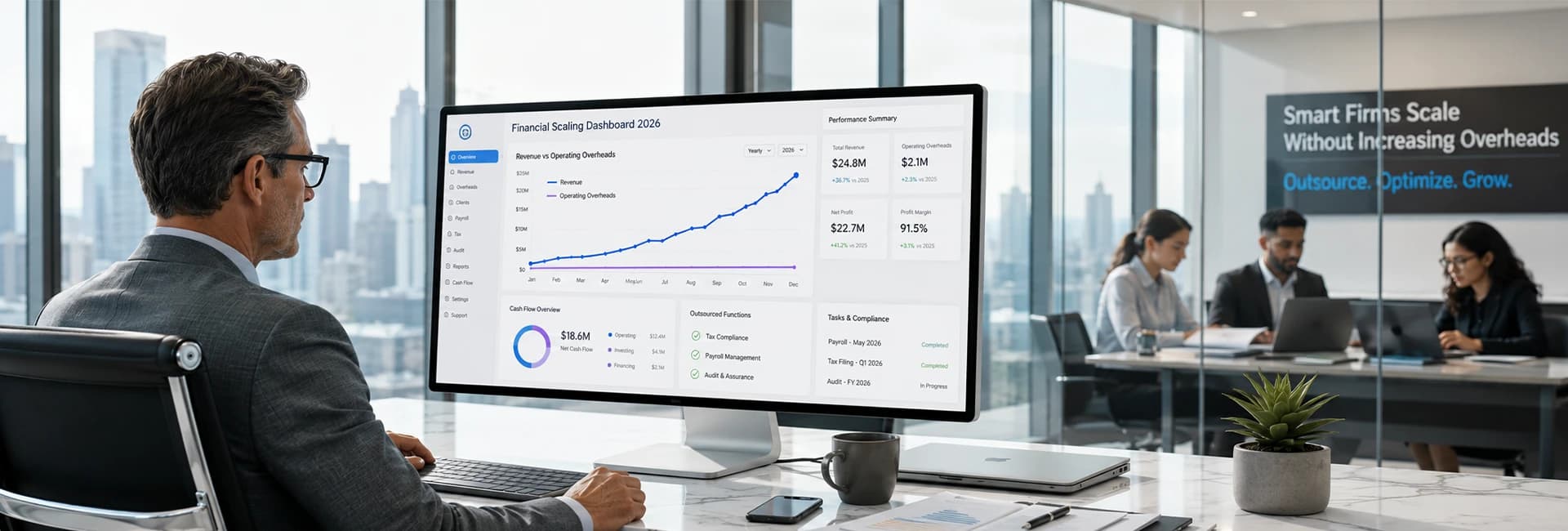
Summary: Outsourced accounting enables firms to scale efficiently by replacing fixed finance overhead with flexible, technology-driven capacity. It improves accuracy, accelerates reporting, and delivers strategic insights; helping businesses manage complexity, reduce costs, and build a finance function designed for sustainable, long-term growth.
The fastest-growing firms today aren’t adding more accountants; they’re rethinking how accounting gets done faster & accurate.
There's a quiet crisis inside many scaling firms. Revenue climbs. Demand grows. And yet, profitability stalls because financial complexity multiplies faster than internal teams can handle. Month-end closes stretch into weeks. Compliance timelines slip. And leadership reaches for the familiar lever: hire more people.
But that lever is expensive and increasingly unreliable. The U.S. accounting talent pool dropped roughly 10% between 2019 and 2025, as per Abroadworks,a structural shortage no hiring budget can simply outspend.
The firms breaking through this ceiling aren't building bigger finance departments. They're deploying a smarter financial strategy; one built on outsourced accounting as a core operational model, not a last resort.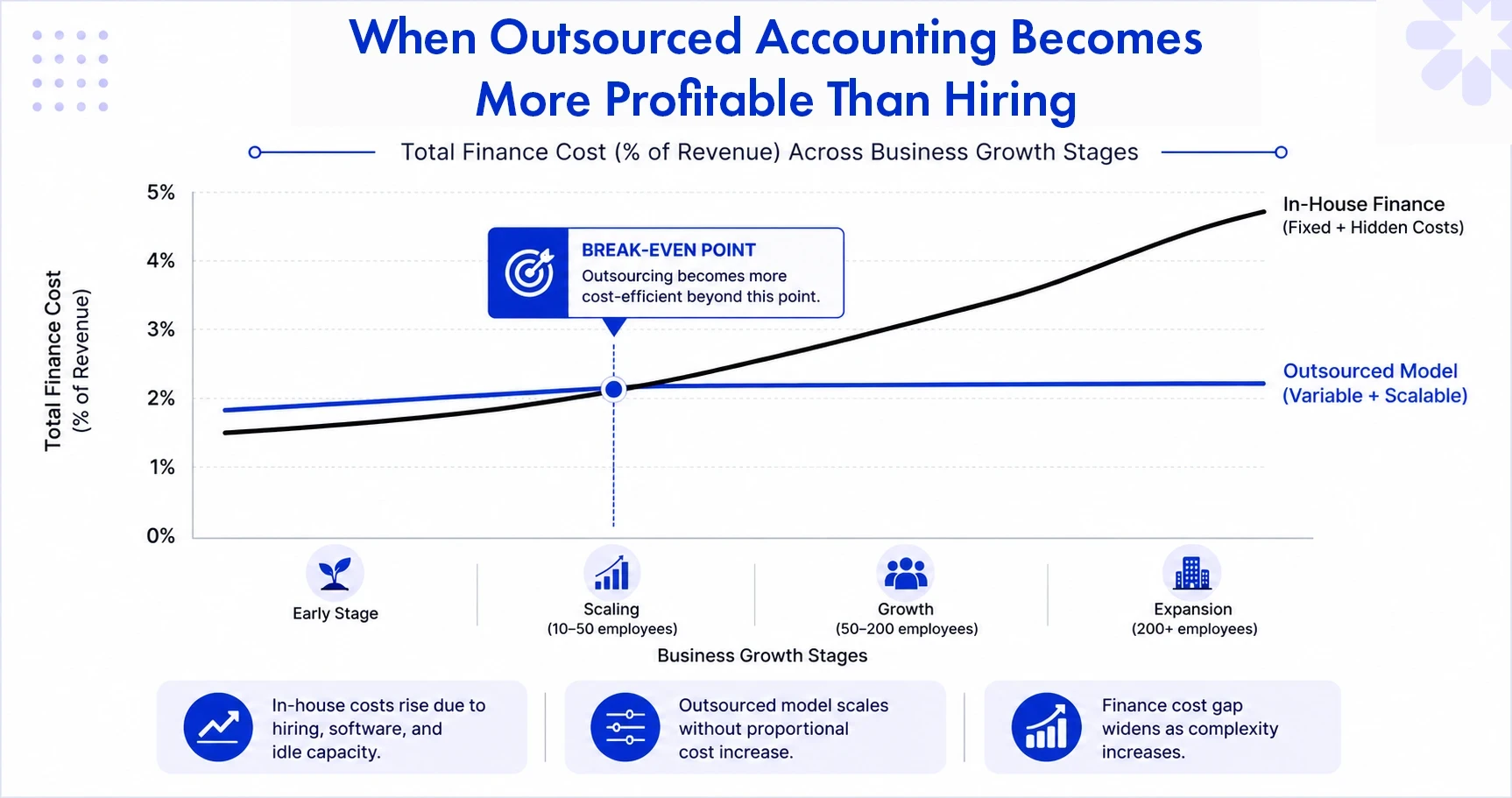
What outsourced accounting actually means in 2026
This isn't about offloading bookkeeping to a freelancer. Today's outsourced solution is a fully integrated operational model; delivered through cloud-native platforms, AI-assisted workflows, and dedicated specialist teams. It typically covers:
- Transactional finance — accounts payable/receivable, payroll, reconciliation
- Compliance and reporting — tax filings, regulatory monitoring, audit-ready documentation
- Strategic advisory — cash flow forecasting, FP&A, and fractional CFO support
The market reflects this shift. The global finance and outsourcing accounting market is projected to grow from $54.79 billion in 2025 to $85.92 billion by 2031, as per Mordor Intelligence, driven by businesses that have discovered the operational leverage this model delivers.
The result is a shift from a transactional vendor to a strategic consulting partner, one embedded into your financial infrastructure, not sitting outside it.
The real financial strategy behind outsourced accounting
It redefines the cost of scaling
The conventional growth model assumes more revenue requires more headcount; but in finance, that equation breaks down fast. A single senior accountant costs $80,000–$130,000 annually before benefits, training, and software overhead.
According to a survey, an outsourced solution changes the equation entirely. Businesses that outsource accounting report cost savings of 20–60% compared to equivalent in-house capacity, while gaining access to a specialist bench no single hire can replicate:
- Tax compliance experts
- FP&A analysts
- Forensic accountants
- Multi-jurisdiction regulatory specialists
It converts fixed overhead into variable capacity
In-house teams create fixed overhead; you pay regardless of volume, season, or whether the work justifies the headcount. Outsourcing accounting services converts that into variable, outcome-linked capacity:
- Scale up during year-end close, audit season, or rapid expansion
- Contract back during leaner cycles without redundancy costs
- Eliminate idle capacity that quietly erodes margins year-round
For firms with uneven transaction volumes, this structural elasticity isn't just a cost benefit; it's a foundational financial strategy decision.
Benefits of outsourced accounting: Beyond the cost argument
The businesses extracting the most value from this model moved past the cost conversation long ago. Here's what actually compounds:
1. Latest accounting technology without any investment
Cloud ERPs, AI-driven anomaly detection, automated reconciliation; deploying this infrastructure independently requires significant investment. Outsourced accounting partners have already built it. You inherit enterprise-grade capability at zero capital cost. Businesses accessing the latest accounting technology this way report up to a 40% efficiency gain.
2. Risk reduction and accuracy built into the process
As firms scale across jurisdictions, compliance complexity multiplies faster than internal teams can manage. Outsourcing accounting services layers in dedicated compliance specialists, automated validation controls, and multi-reviewer workflows; producing the kind of risk reduction and accuracy that manual in-house operations can't consistently sustain.
3. Financial intelligence, not just closed books
A well-structured outsourced solution generates forecasting models, variance analyses, and real-time KPI dashboards; transforming finance from a reporting function into a live decision-support system for leadership.
Outsourcing misconceptions costing businesses time & money
Misconception 1: "We'll lose control"
Firms that move to structured outsourcing accounting services typically gain more visibility; through real-time dashboards, defined SLAs, and standardized reporting. The model is also modular: outsource high-volume transactional functions (AP/AR, payroll) while retaining strategic decisions in-house.
Misconception 2: "It's only for large enterprises"
This belief keeps mid-sized businesses on manual, error-prone processes while competitors scale. Insignia Resources finds out that over 65% of companies outsource primarily to free up internal teams, not because they've crossed some size threshold. The SME segment is projected to grow at 8.93% CAGR through 2031, per Mordor Intelligence.
Misconception 3: "Quality suffers"
Among common misconceptions about outsourcing, this one has the highest cost when left unexamined. Quality risk is a function of poor partner selection; not the model itself. Credible partners maintain SOC 2 Type II certifications, bank-grade encryption, and audit trails that most in-house environments don't replicate.
Misconception 4: "The transition is disruptive"
Poorly scoped transitions are disruptive. Structured ones; with clear data migration protocols, parallel-run periods, and repeatable onboarding playbooks; aren't. A credible outsourced accounting partner absorbs that complexity by design.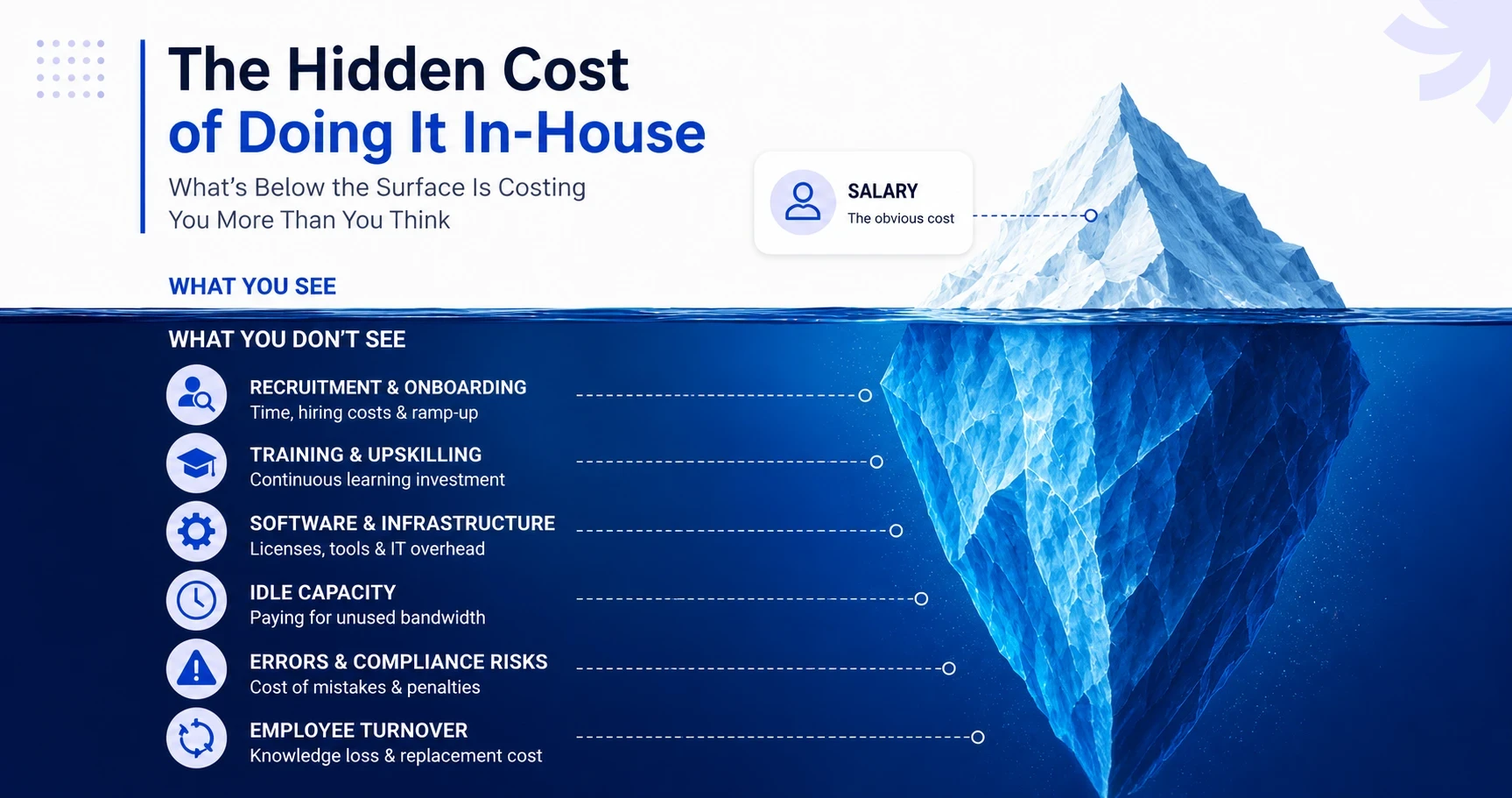
What a scaled outsourced accounting model actually looks like
Understanding the benefits in principle is one thing. Seeing what the model delivers operationally is another. Here's what a well-deployed outsourced solution typically covers across a scaling mid-market firm:
Transactional layer:
- Accounts payable and receivable processing
- Payroll administration and multi-state compliance
- Bank reconciliation and general ledger maintenance
- Expense management and vendor payment processing
Reporting and compliance layer:
- Monthly and quarterly financial statement preparation
- Tax compliance across relevant jurisdictions
- Audit-ready documentation and filing support
- Regulatory change monitoring and adaptation
Strategic layer:
- Cash flow forecasting and scenario modeling
- Budgeting and variance analysis
- KPI dashboard development and maintenance
- Fractional CFO advisory for strategic financial decisions
Each layer operates on defined SLAs, with clear escalation paths and performance benchmarks. This is the architecture of a finance function built for scale; not patched together as headcount allows.
Technology infrastructure driving outsourced accounting forward
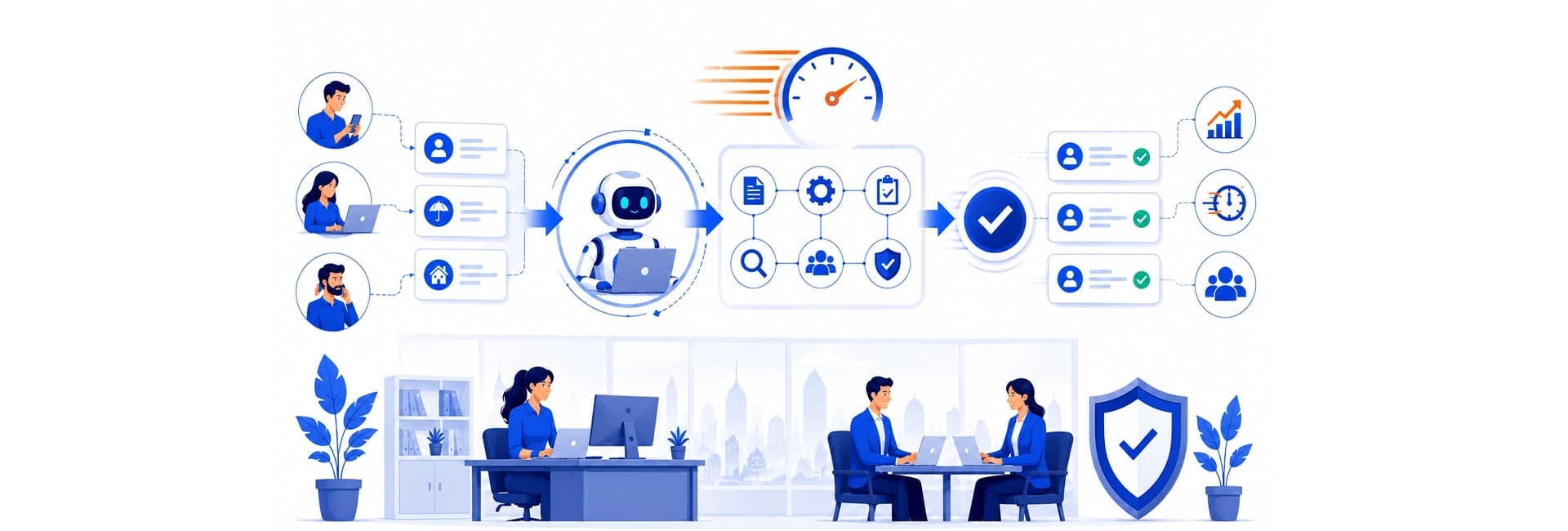
The capabilities of outsourcing accounting services have expanded dramatically because the underlying technology has transformed. What separates leading outsourced accounting partners from commodity providers is how deeply they've embedded intelligent automation into their delivery workflows.
AI-driven anomaly detection flags unusual transactions in real time; catching errors and potential fraud before they surface in reports. Robotic process automation (RPA) handles high-volume, rule-based tasks like invoice matching and payment runs with speed and consistency no manual process achieves. Cloud-native ERP integrations eliminate data silos, ensuring your financial data is accurate, current, and accessible across your organization.
A survey of nearly 600 accounting professionals found that 71% busineeses believe AI will have a substantial impact on the accounting industry and the leading outsourced providers are already operationalizing that belief. They're not preparing for AI integration. They've already built it into standard delivery.
For businesses still operating on manual spreadsheet-based workflows, the technology gap between in-house and outsourced delivery is widening every quarter.
How to evaluate an outsourced accounting partner: A decision framework
Not all outsourced accounting providers offer the same depth. When evaluating an outsourced solution, apply these criteria:
- Specialist depth: Does the partner have demonstrated expertise in your industry's specific compliance and reporting requirements, not just general accounting?
- Technology stack: Are they operating on current cloud platforms with AI-assisted workflows, or are they replicating manual processes remotely?
- Security architecture: Do they hold SOC 2 Type II certification? What are their data encryption standards, access control protocols, and incident response procedures?
- Scalability architecture: Can their delivery model expand with your business, including across new geographies or entities, without requiring full re-implementation?
- Reporting transparency: What does the client-facing reporting cadence look like? Do you get real-time dashboard access, or are you waiting for periodic summaries?
- Commercial model: Are fees structured around outcomes and scope, or purely around input hours? Outcome-linked contracts align your partner's incentives with your business performance.
The right partner operates as a strategic consulting partner; one who understands your business model, anticipates your compliance obligations, and proactively identifies financial risks before they become operational problems.
Stop funding overhead. Start funding growth
Scaling without increasing overheads isn't luck; it's a deliberate operational decision. Outsourcing accounting services convert a fixed, headcount-dependent cost center into a variable, technology-enabled function that grows with your business rather than against it.
The benefits of outsourced accounting; cost efficiency, technology access, risk reduction and accuracy, strategic financial intelligence; are operational realities for firms that have made the shift. The common misconceptions about outsourcing persist only among those who haven't yet examined the evidence.
If your firm is hitting the limits of its current finance infrastructure, the question isn't whether an outsourced solution can help. It's whether you can afford to delay.
FBSPL partners with scaling businesses to build finance and accounting infrastructure that supports growth; without the overhead that typically comes with it. Consulting-led. Technology enabled. Built around your operational reality.


Bhavishya Bharadwaj
Bhavishya Bharadwaj is the Digital Marketing Manager at FBSPL, bringing over a decade of experience across insurance, outsourcing, accounting, and digital transformation.
Frequently Asked Questions
When financial complexity increases, reporting slows, or hiring more accountants no longer improves efficiency or accuracy.