


How MGAs can speed up new business without creating operational backlog
7 MIN READ/Aug 04, 2026
Summary: Winning more submissions means very little if your operations can't keep pace. This blog explores why growing MGAs develop backlogs and how smarter workflows; not simply adding staff; help support faster, sustainable growth.
Learn practical strategies MGAs use to accelerate submissions while eliminating operational bottlenecks and supporting sustainable growth.
Growing submission volumes feel like a win. More brokers calling, more opportunities landing in the inbox, more premium moving through the pipeline; on paper, that's exactly what healthy growth is supposed to look like.
But talk to almost any MGA that's scaled quickly, and you'll hear a different story underneath the good news.
As submissions climb, policy issuance slows down. Endorsements start stacking up. Underwriters spend more of their day chasing paperwork than actually evaluating risk, and operations teams fall further behind no matter how hard they push.
Here's the uncomfortable truth: the business isn't growing too fast. The operational foundation just never grew up with it.
Most MGAs pour resources into quoting faster and winning more submissions, while the workflows underneath; the ones that actually move a policy from intake to bound; stay exactly the same as when the book was a third of the size. The front end speeds up. The middle and back office don't.
The real challenge was never "how do we quote faster." It's building an operating model where submissions can move from intake to binding; and beyond without quietly creating bottlenecks along the way.
Why faster growth often creates operational backlogs
Backlogs don't show up overnight. They build slowly, submission by submission, until one day the queue is unmanageable.
A lot of it comes down to a costly assumption: that growth and operational efficiency are two separate projects. Underwriting teams push to quote more. Operations teams focus on processing what's already been written and staying compliant. Both are working toward the same goal; rarely as one connected system.
Here's the pattern, almost every time:
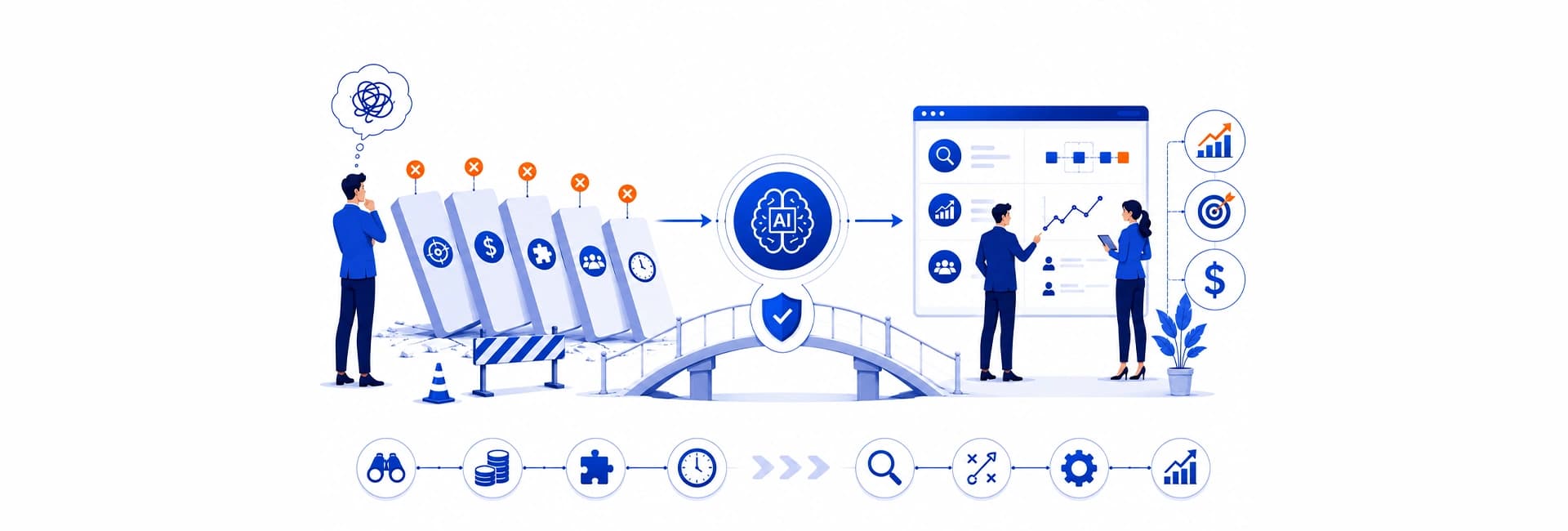
An MGA invests in faster intake and promises brokers quicker turnaround. Underwriters step up, quotes go out sooner, and more deals move toward binding. From the outside, it looks like a clear win.
Meanwhile, everything downstream keeps running the way it always has:
- Policy issuance still depends on someone manually keying in data
- Compliance reviews still crawl through rounds of email approval
- Carrier reporting still lives in spreadsheets
- Documentation checks still wait until underwriting has already decided
- Admin work still lands on underwriters' desks
Add more submissions on top of that, and downstream steps buckle under the weight.
Think of it like widening a highway without touching the exit ramps. Traffic moves faster right up until every car reaches the same bottleneck; and then it's worse than before.
Speeding up intake without rebuilding what comes after it doesn't remove the delay. It just relocates it. The instinctive fix; hire more underwriters; usually doesn't solve much either; more people inside the same broken process typically just means more work hitting the same choke points, faster.
Real, sustainable growth comes from fixing the whole submission-to-bind lifecycle; not from speeding up one stage of it.
The Hidden Cost of Growing Too Fast
| As the Business Grows... | Here's What Happens Behind the Scenes |
| Submission volume rises | Underwriting queues get longer |
| Quotes go out faster | Policy issuance falls further behind |
| More policies get bound | Endorsement backlogs pile up |
| New carrier relationships form | Compliance workload increases |
| Broker relationships expand | Admin burden grows across the team |
None of this happens because a company grew. It happens because the processes underneath were never designed to grow with it.
Common causes of operational backlogs in MGAs
Every MGA runs a little differently, but the root causes of backlog look remarkably similar across the industry.
1. Fragmented submission intake
Some brokers send business by email. Others upload PDFs through a portal. Plenty still rely on spreadsheets or hand-filled applications; no two submissions arrive in quite the same shape. Skilled underwriters end up chasing missing fields and cleaning up files instead of evaluating risk. A few extra minutes per submission turns into hours once volume climbs.
2. Repeated manual data entry
It's not unusual for a single submission's details to get:
- Entered into an intake form
- Re-entered into the policy admin system
- Copied into a carrier portal
- Added to an internal tracking sheet
- Recorded again for reporting
Every touchpoint adds time; and a chance for something to get entered wrong.
3. Sequential instead of parallel workflows
Compliance waits for underwriting. Carrier documentation waits for compliance. Policy issuance waits for carrier confirmation. Sound familiar? A lot of MGAs still process work in strict sequence, even when several steps could safely happen at once. The MGAs that move fastest have restructured this into parallel workflows wherever possible.
4. Limited middle-office capacity
Most MGAs run lean, on purpose. That works fine when submission volume is steady; it stops working the moment growth accelerates. Tasks like policy checking, endorsement processing, bordereau preparation, carrier reporting, and documentation validation pile up faster than anyone can clear them.
5. Compliance and documentation debt
Compliance problems build quietly, one delayed task at a time, until an audit or carrier reporting deadline exposes how far behind things have gotten. According to the NAIC's First-Half 2025 P&C and Title Insurance Industries analysis, U.S. P&C insurers reported policyholders' surplus north of $1.09 trillion; underscoring how much capital carriers and their delegated partners are on the hook to protect.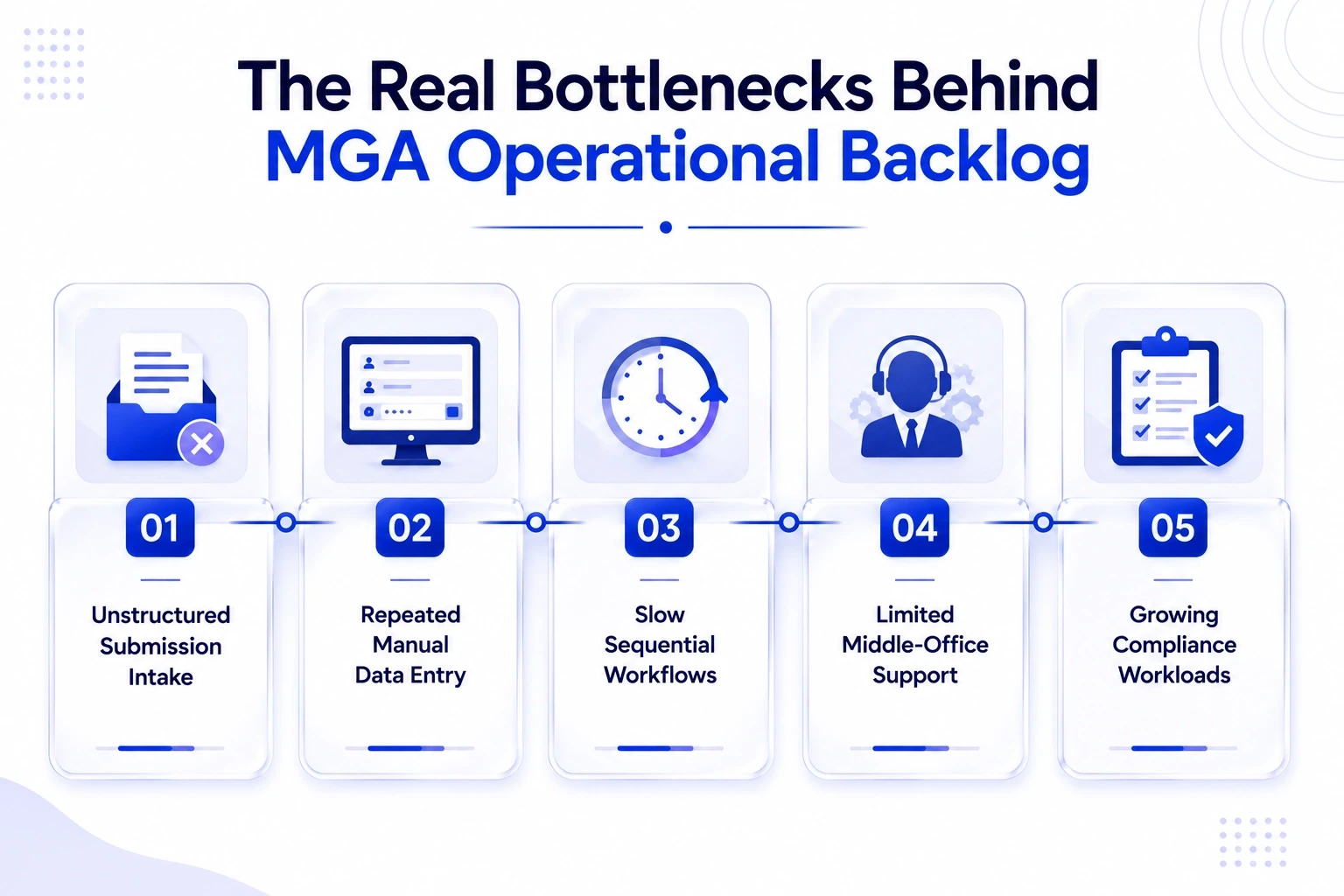
Why hiring alone isn't the answer
More submissions, more people; problem solved? Not really. Adding headcount without rethinking how work flows usually just creates a pricier version of the same bottleneck. New hires still inherit the same manual steps and disconnected systems that caused the backlog in the first place.
| Just Adding Headcount | Redesigning the Workflow |
| Increases cost immediately | Reduces cost over time |
| New hires inherit the same broken process | Removes unnecessary steps from the process itself |
| Buys short-term relief | Builds long-term capacity |
| Backlog often returns at higher volume | Backlog stays manageable as volume grows |
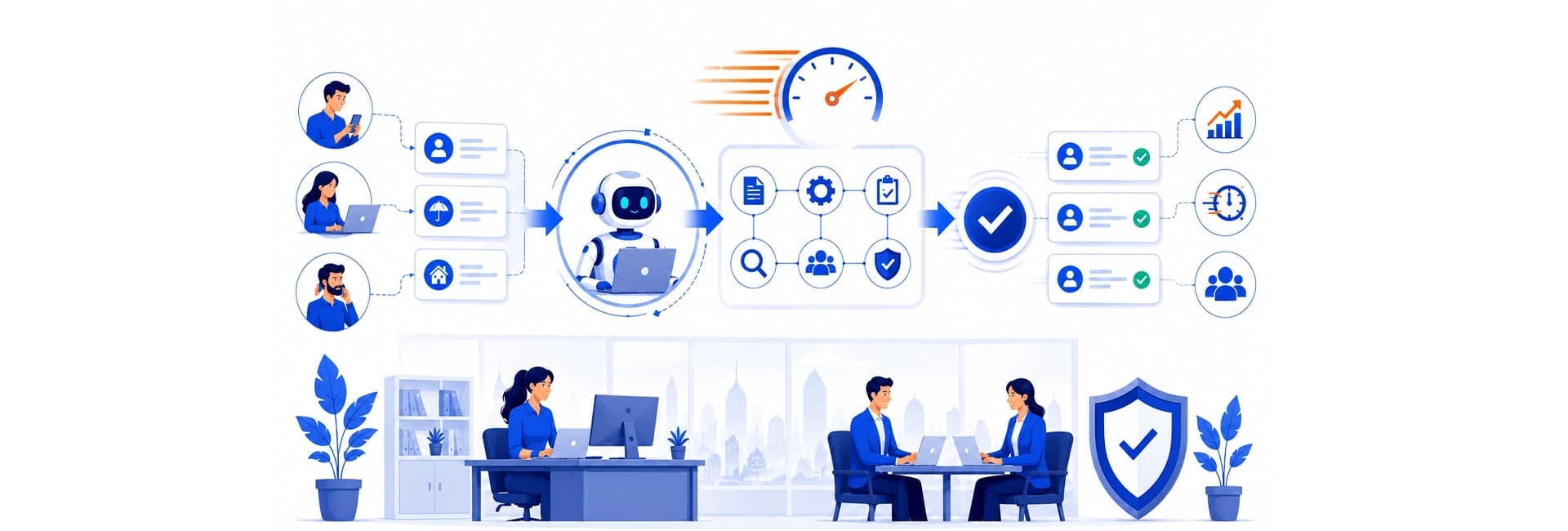
The better move is separating work by what it actually requires. Document validation, policy checking, compliance tracking, bordereau prep, data verification, and issuance support can often be standardized, automated, or handed off to dedicated operational specialists; freeing underwriters to focus on pricing risk and deepening broker relationships.
Solving operational backlog was never really about adding more people to the workflow. It's about building a workflow that needs fewer unnecessary touches to begin with.
What changes when the workflow changes
Operations usually don't become a problem overnight, and they rarely improve overnight either. But once an MGA starts fixing the way work actually moves through the business, the difference becomes difficult to ignore.
Underwriters aren't pulled away to sort out missing documents or recheck information that should have been right the first time. Policy issuance stops sitting in long queues, compliance work is completed before deadlines become a concern, and operational teams spend less time clearing old work just to keep up with new submissions.
The results tend to show up in practical ways:
- Retail agents hear back sooner, not because people are rushing, but because fewer tasks get stuck waiting for the next step.
- Errors become less common. Information flows through a more consistent process, leaving fewer opportunities for missed documents, duplicate entries, or compliance issues.
- Growth becomes easier to manage. As submission volumes increase, the workflow absorbs more of the pressure instead of passing it straight to the team.
The MGAs handling growth well aren't always the ones writing business the fastest. More often, they're the ones that invested in the work happening behind the scenes, making sure their operations could keep pace before volume exposed the cracks.
Building the engine, not just the front door
Operational backlog isn't a sign an MGA is failing; it's a sign the operating model hasn't caught up with growth. Fixing it means treating submission-to-bind as one connected workflow, not a chain of departments each protecting its own queue.
This is where FBSPL comes in. As an insurance consulting partner serving MGAs, carriers, and brokers across the globe, FBSPL takes on the high-volume, rules-based work; policy issuance, endorsements, data entry, compliance tracking, and carrier reporting; so in-house team can stay focused on growth. With trained insurance teams and workflow consulting built specifically for MGAs, FBSPL helps growing agencies scale new business without letting the backlog catch up.


Bhavishya Bharadwaj
Bhavishya Bharadwaj is the Digital Marketing Manager at FBSPL, bringing over a decade of experience across insurance, outsourcing, accounting, and digital transformation.
Frequently Asked Questions
It's the work that keeps piling up because submissions arrive faster than they're processed. Over time, delays spread across policy issuance, endorsements, compliance, and everyday servicing.