
7 MIN READ·Sep 29, 2025·Written by Bhavishya Bharadwaj

Uncover the biggest risks in insurance data migration and learn practical strategies to avoid downtime, protect client trust, and make transitions smoother with smart planning and expert support.
There’s usually a moment in every insurance agency when someone says: “We need to move everything into a new system.” At first, it sounds like housekeeping, just files moving from one cabinet to another. But the reality? It’s more like moving a house after decades of living in it: boxes get misplaced, fragile things break, and sometimes you open up a drawer and find items you didn’t even know you still owned.
That’s how insurance data migration feels. The information that powers claims, policies, and compliance doesn’t transfer itself neatly. There are always surprises; some minor, some business-critical. Data migration risks show up not because teams don’t care, but because data is messy, legacy systems are stubborn, and the process demands precision under pressure.
Some agencies lean on internal teams to push through. Others turn to end-to-end data migration services to get it right the first time, sidestepping what can otherwise end in costly delays or, worse, lost trust with clients. The crucial point? Without preparation, the struggle with data migration is almost guaranteed.
In this blog, the aim is to unpack real data migration challenges, explore the importance of data migration, and highlight practical ways to balance risks with smart mitigation strategies.
Insurance data migration is rarely straightforward. The files, sometimes decades old, can be tangled in formats, missing key fields, or locked inside outdated systems no one knows how to operate anymore.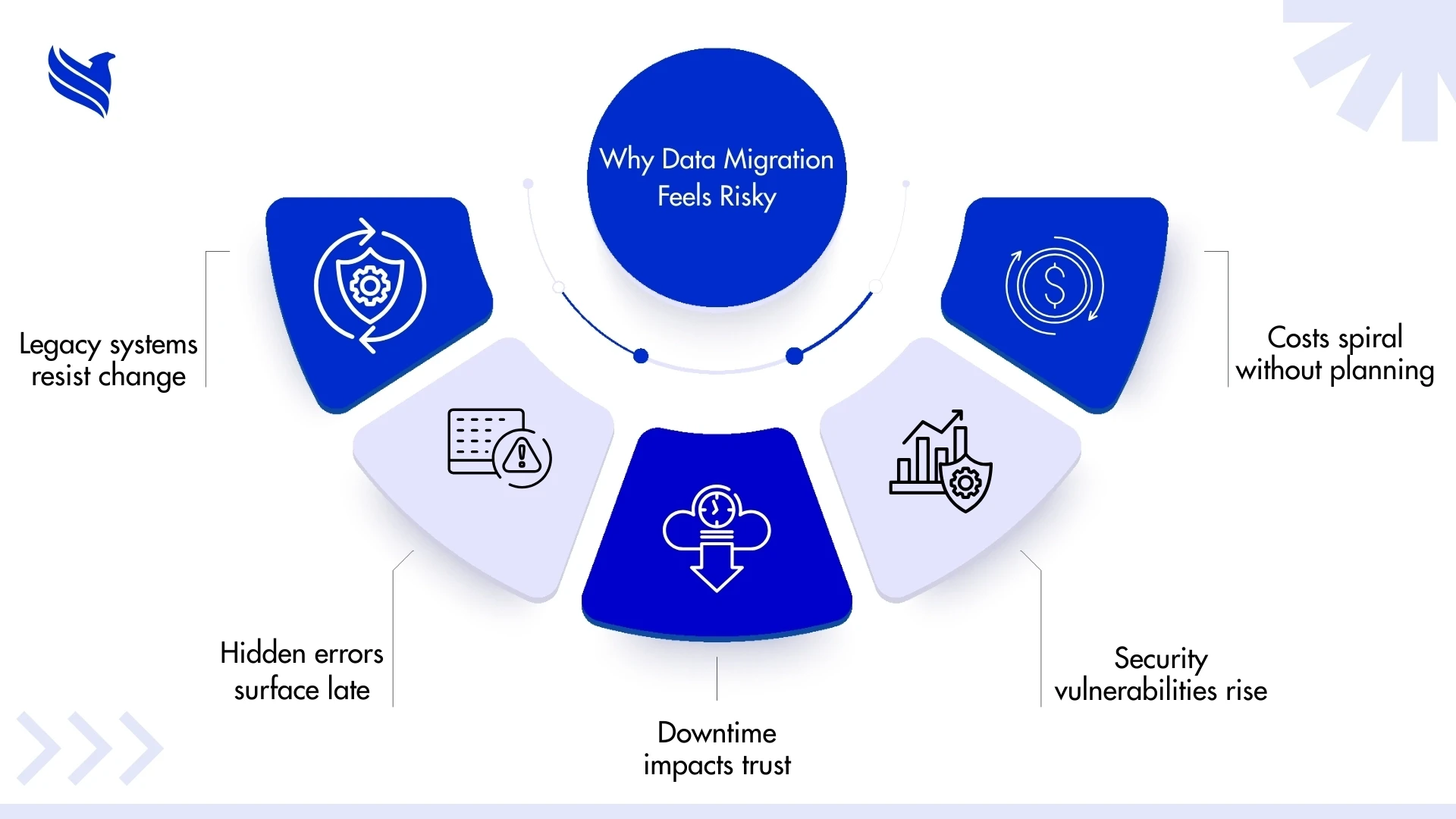
Some common snags include:
These examples show why migration risks and mitigation aren’t just theoretical, they directly influence whether an agency emerges stronger or struggles with damage control.
Data Migration in Insurance isn’t something agencies pursue just for fun; it happens because standing still is riskier. Sometimes the old system simply can’t keep up. Other times, the pressure comes from changes in ownership, compliance, or customer expectations.
Typical triggers include:
Below is a quick look at the pros and cons of these situations: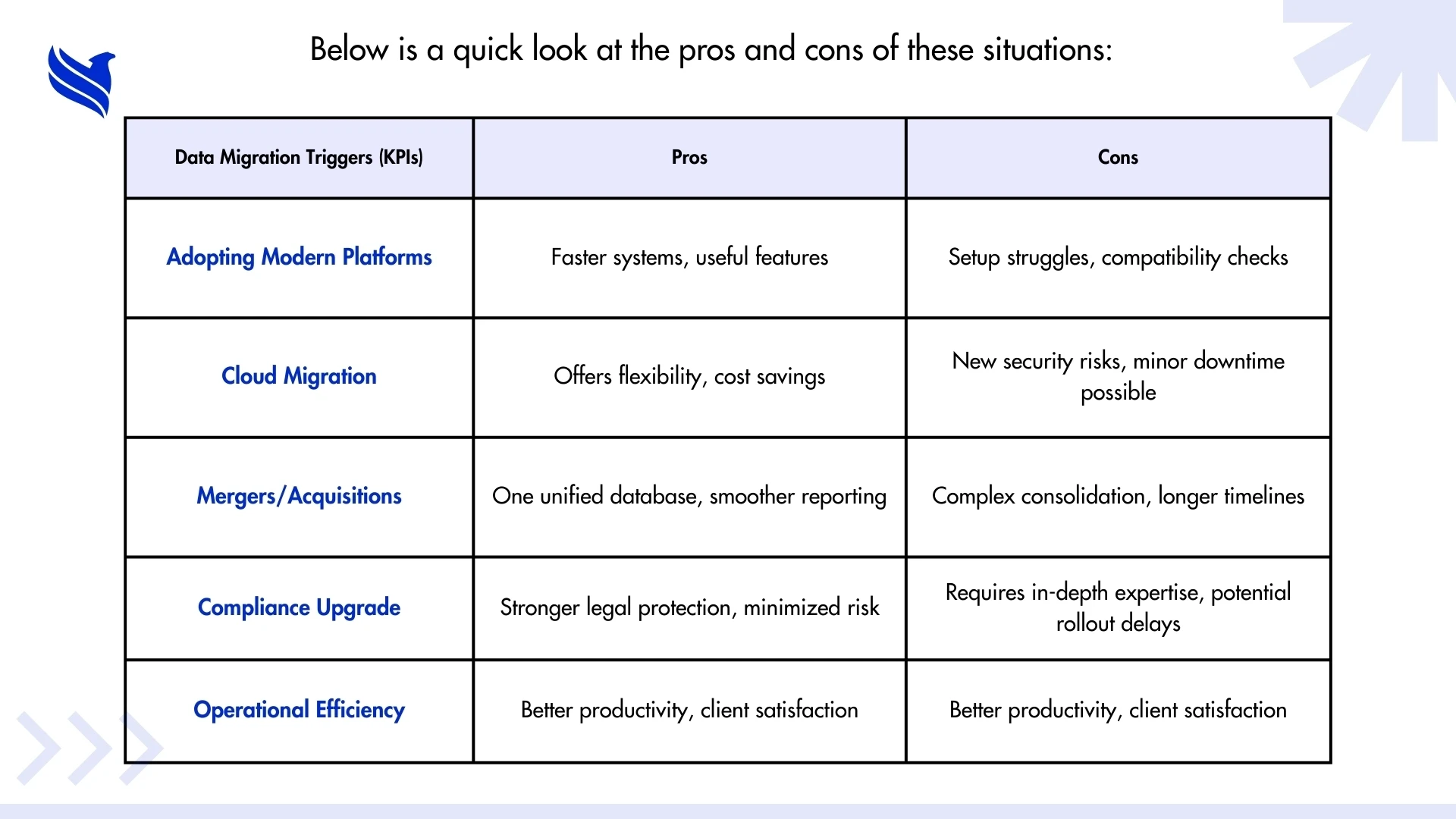
Some agencies run into these triggers gradually; for others, it’s a sudden mandate from leadership or regulators. Either way, ignoring the signal risks more than the migration itself.
Reducing data migration risks is about preparation and steady execution, not speed. Common-sense steps help agencies avoid headaches: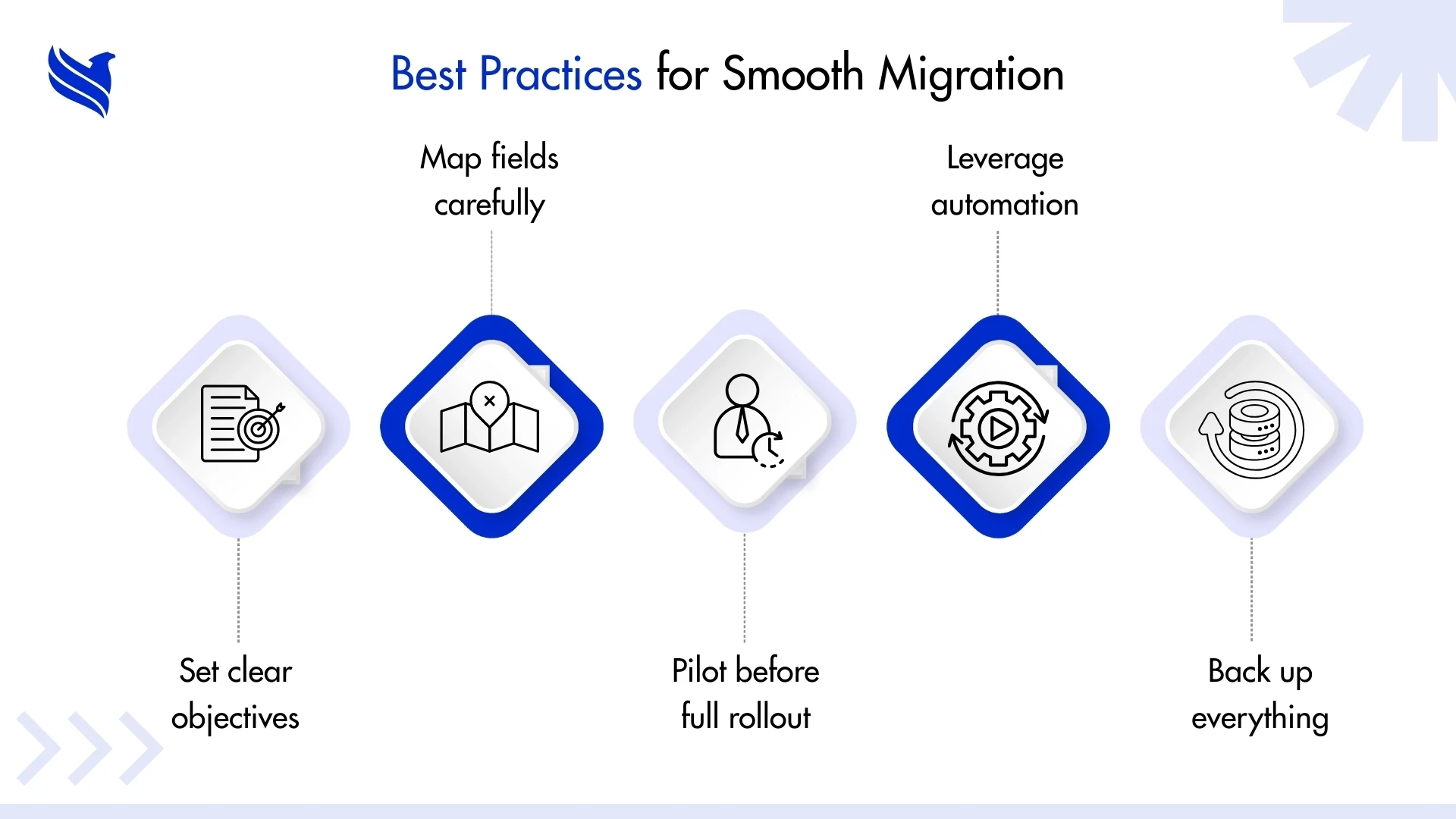
Each of these points may sound obvious, but skipping even one is what fuels the struggle with data migration.
Planning isn’t just about technical checklists, it’s about pacing the work in a way that minimizes stress. How to plan a data migration project involves steps that flow logically but may overlap:
Even with a perfect plan, agencies should expect small hiccups, but structured steps make those manageable.
For many insurance agencies, outsourcing is more than a convenience, it’s the safety net that ensures complicated data moves don’t derail daily operations. Data migration services offered by experienced teams cover:
Outsourcing isn’t about giving up control, it’s about bringing in hands that already know where the pitfalls are and how to step around them.
Here’s the thing: moving data is never just about moving data. In an insurance agency, those files carry the story of every client, every payout, every hard‑won relationship. Lose track of that for even a moment and you’re gambling with your reputation. And in this business, reputation doesn’t grow back easily.
The hidden risk of poor data migration isn’t abstract. It looks like a policyholder on the phone, waiting while systems crawl. It looks like a missing claim record when auditors come knocking. It feels like downtime right when storms hit and calls triple. Those moments create scars, on trust, on morale, on the bottom line.
But migration doesn’t have to be a horror story. Done deliberately, it’s a reset button. A chance to clean the junk out of old systems, tighten security, and move onto platforms that are actually built for what modern agencies need. This is where partners matter. Not just tech vendors with checklists, but people who live and breathe this space, bringing insurance consulting services, insurance agency optimization services, and end‑to‑end data migration services that anticipate problems before they burn cash and time.
Agencies reach a point where the choice is plain. Keep patching outdated systems until they break at the worst possible moment, or tackle migration properly and turn it into an advantage. The first path leads to frustration. The second leads to stability, efficiency, and trust that lasts. At FBSPL, this isn’t theory. It’s the work, standing shoulder to shoulder with agencies so they can migrate with confidence, not regret.
Because you’re not just moving numbers on a spreadsheet, you’re moving people’s lives, their claims, their history. If another industry loses a marketing list, it’s annoying. If an insurance agency loses a claims file, it’s a lawsuit waiting to happen. That’s the difference.
Get the latest insights on insurance operations, policy management, and industry best practices.