
1 MIN READ·Oct 16, 2026·Written by Bhavishya Bhardwaj

Hiring a new employee isn’t just about completing paperwork and setting up payroll. For employers and benefits administration teams, the major responsibility lies in making sure the employee is enrolled in the right benefits and within the given timeframe.
New hire benefits enrollment involves a multi-step process, right from confirming eligibility and enrollment forms to submitting information to insurance carriers and coordinating for payroll deductions. If any of these activities are processed incorrectly or delayed, the entire employee benefits administration process gets hampered. As a result, it leads to coverage issues, multiple follow-ups, and increased administrative workload.
Hence, understanding step-by-step new hire enrollment process helps teams manage these responsibilities more accurately and create a smoother benefits administration services experience. This blog will shed light on the new enrollment process, checklist, and best practices for employee benefits teams.
New hire benefits enrollment is the process of enrolling a new employee in the benefit plans offered by an employer. Once the employee meets the eligibility requirements, the benefits team collects the required employee information, checks the enrollment details, submits them to the insurance carriers, and updates the CRM or payroll systems.
The new hire enrollment process requires multi-step coordination. For example, the employee provides the required information, while the employer manages eligibility and enrollment activities, and the insurance carriers process coverage and payroll details.
For insurance agencies, managing multiple employer groups and keeping these activities aligned becomes crucial as enrollment volumes increase.
The new hire benefits enrollment process begins when an employee becomes eligible for employer-sponsored benefits and continues until their elections are reflected in the system. Here is the step-by-step process for new hire enrollment.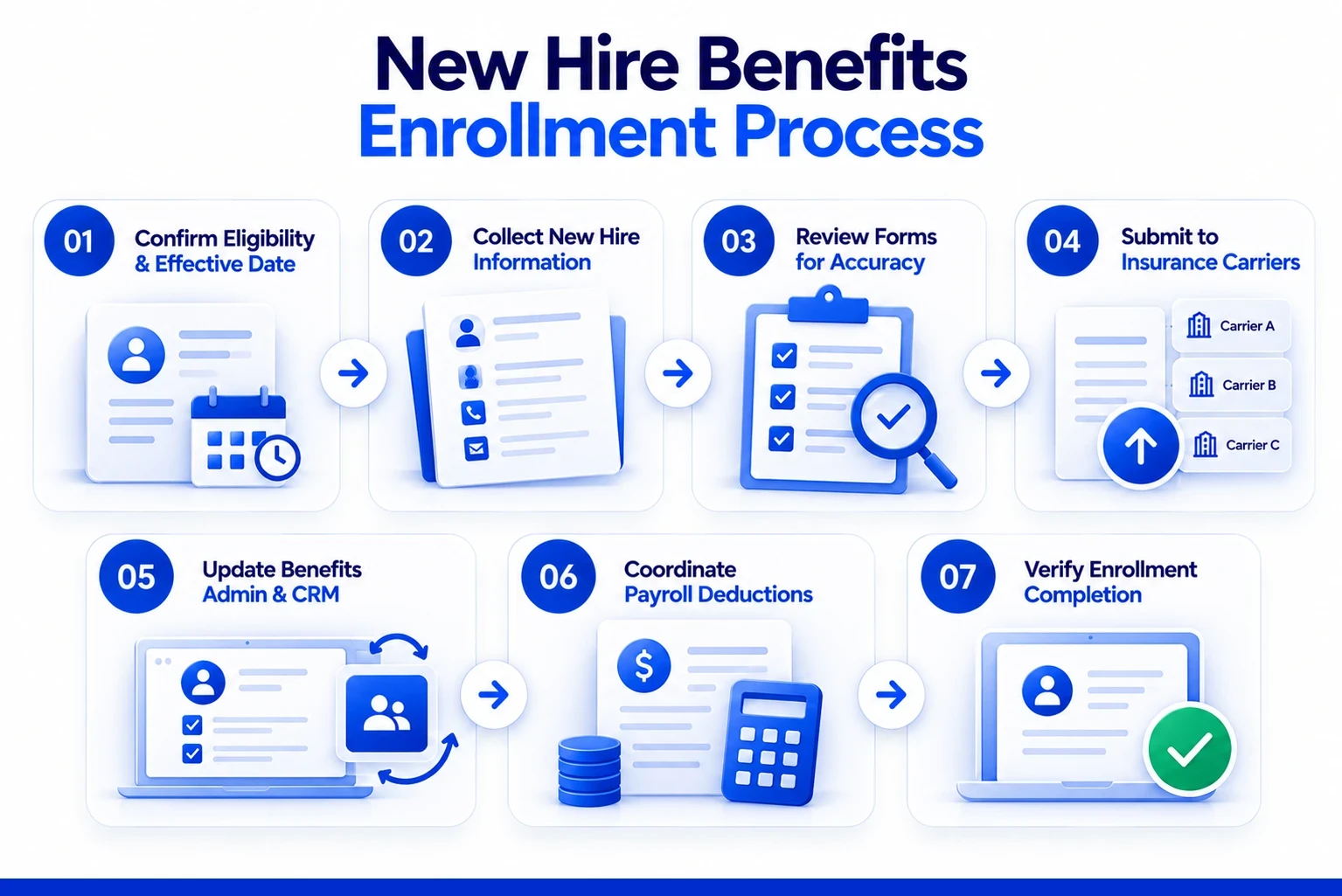
Before enrollment begins, the benefits team confirms the new employee’s eligibility requirements of the benefit plans. For that, they need to check the employment status, waiting periods, and the applicable coverage effective date.
TIP - Getting accurate information prevents enrollment delays or coverage being activated on an incorrect date.
Once eligibility is confirmed, the employee provides the information required to complete enrollment. For example, personal details, benefit elections, dependent information, beneficiary details, and supporting documentation where applicable. Employees may also choose to decline certain benefits based on their preferences.
Enrollment forms should be checked twice for missing, incomplete, or inconsistent details before submitting it to an insurance carrier. A simple error in an employee's name, plan selection, or effective date might result in delays. Therefore, careful new hire insurance enrollment information is required.
After data verification, the enrollment request is submitted to the insurance carrier through an online portal. Later, benefits teams keep track of submission status to make sure the enrollment has been received and processed successfully.
The employer or benefits administration team update the employee’s enrollment information in the systems. This further keeps CRM and benefits administration records aligned with carrier information, ensuring reliable records of the employee’s elections, coverage details, and enrollment status.
Once coverage details are confirmed, the corresponding payroll deductions need to reflect the employee’s selected plans and contribution amounts. Incorrect deductions can create payroll discrepancies and additional work for both employees and benefits teams.
The process ends with a final verification of successful coverage processing, accurate employee information, and payroll deductions. Any discrepancies identified at this stage should be resolved promptly, to avoid any discrepancies in the future.
A clear new hire benefits enrollment checklist helps teams make sure every detail is completed before new enrollment. Before proceeding with a new hire enrollment process, verify the following:
This new hire helps teams keep benefits enrollment aligned with the overall onboarding plan.
Even with a defined new hire enrollment process, businesses fail to ensure smooth benefits enrollment due to small errors and coverage issues. Below are the five most common new hire benefits enrollment mistakes businesses make.
Incomplete forms, missing dependent details, or incorrect employee information can delay carrier processing and lead to repeated follow-ups.
Using the wrong eligibility date or coverage effective date can result in delayed activation, incorrect deductions, or the need for carrier corrections.
Enrollment requests that are not submitted within the required timeframe may affect when coverage becomes active and can create avoidable escalations.
If internal systems do not reflect the same information submitted to the carrier, benefits teams may struggle to track enrollment status or respond accurately to employee queries.
Payroll deductions should match the employee’s selected coverage and contribution amount. Any mismatch can affect both payroll accuracy and employee experience.
Expert Tip – Don't Skip Final Enrollment Verification
Submitting an enrollment request is not the same as confirming completion. A final review helps ensure that coverage is active; records are accurate, and any outstanding discrepancies are resolved.
Avoiding costly and time-consuming enrollment errors requires more than following a checklist. At FBSPL, we support insurance agencies and employee benefits teams with exceptional new hire benefits enrollment services, helping them maintain accuracy across the enrollment process.
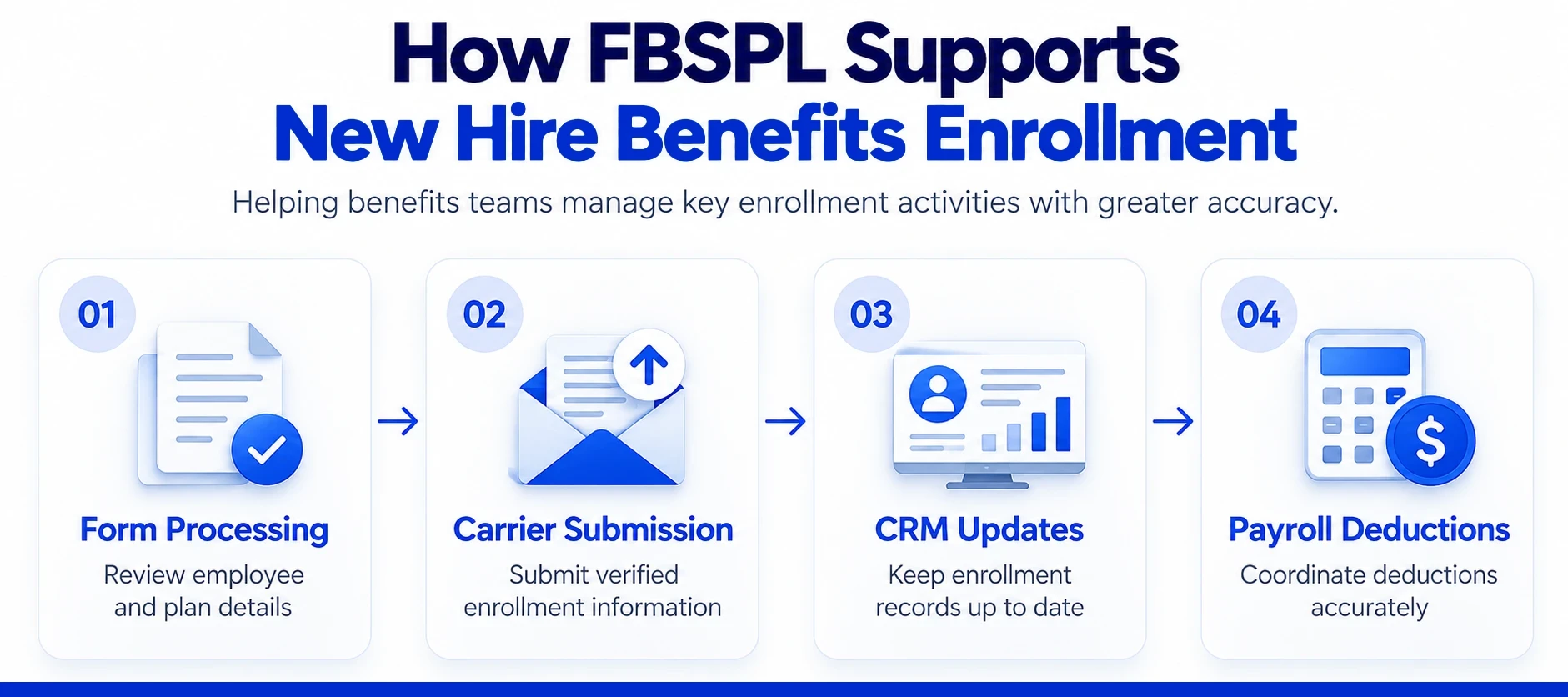
Together, these activities help insurance agencies manage new hire insurance benefits enrollment with greater consistency while reducing the administrative workload. Explore FBSPL’s Employee Benefits Administration Services to learn how we support enrollment and other ongoing benefits administration activities.
There are a lot of business owners who don’t even know “When to seek new hire benefits enrollment support?” The need becomes more noticeable when their routine enrollment work starts affecting turnaround times, accuracy, or the team’s ability to focus on higher-value client activities.
Additional support may be worth considering when:
These are all the major signs to get new hire enrollment support right away and businesses shouldn’t ignore them at any cost.
New hire enrollment becomes a real operational problem when small inaccuracies create larger downstream issues. The goal, therefore, shouldn’t be just completing the new enrollment on time, but to build a streamline process of new hire benefits enrollment.
That is exactly where disciplined execution matters most. When every enrollment is handled with clear checks, timely updates, and consistent follow-through, benefits teams spend less time correcting errors and more time strengthening client relationships.
For insurance agencies looking to manage new hire benefits enrollment, FBSPL provides the operational support needed to keep the process moving without adding unnecessary pressure to internal teams. Our expert support is just a click away.
Get the latest insights on insurance operations, policy management, and industry best practices.