How to Improve Cash Flow Optimization and Real Time Visibility with Automation
1 MIN READ·Nov 16, 2026·Written by Bhavishya Bhardwaj

A business can have healthy revenue and still face a cash shortage. The problem is often not how much money the business generates, but whether finance teams can see clearly what is coming in, what is due, and where cash is already committed.
That visibility remains difficult for many organizations. PwC’s 2025 Global Treasury Survey found that 52% of companies with $1 billion to $10 billion in annual revenue still manually collect and consolidate cash forecasting data. When cash information is spread across spreadsheets, bank accounts, accounts payable, receivables, and expense systems, even a current cash position can take time to establish.
This is where cash flow optimization comes into the picture. It requires a connected cash flow process that gives finance teams a clearer view of liquidity, upcoming obligations, and potential shortfalls.
Cash flow automation can help close that visibility gap by bringing financial data together, reducing manual updates, and strengthening Cash Flow Forecasting.
So, what should businesses automate, and how does that translate into better real-time cash visibility? This blog breaks down the process.
What is Cash Flow Optimization?
Cash flow optimization is the process of improving how a business manages the timing, visibility, and movement of cash across its operations. The goal is to make sure the business has enough liquidity to meet obligations while using available funds efficiently.
Optimizing cash flow means keeping an eye on receivables, payables, operating expenses, upcoming commitments, and short-term funding needs. A strong cash flow process gives finance teams a clearer picture of where cash is coming from, where it is going, and when pressure on liquidity may appear.
What Are the Common Cash Flow Management Challenges?
Cash flow problems do not always begin with a shortage of cash. In many cases, the bigger issue is that finance teams do not have a complete or timely view of how cash is moving across the business.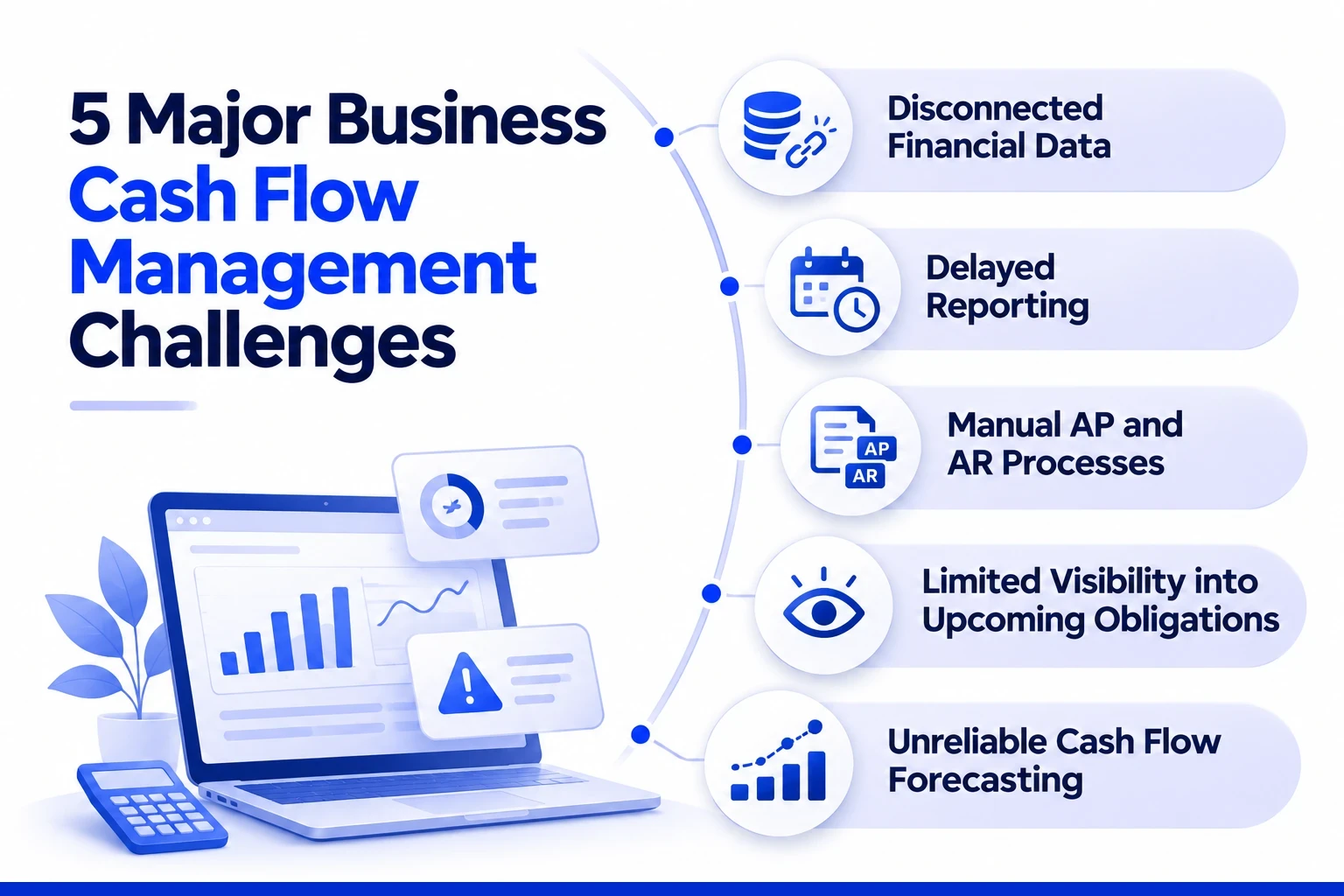
The following are the five most common challenges affecting the cash flow process:
#CHALLENGE 1 - Disconnected Financial Data
Cash balances may sit in banking platforms, receivables in one system, payables in another, and expenses somewhere else entirely. Finance teams then have to bring that information together manually before they can understand the current cash position.
#CHALLENGE 2 - Delayed Reporting
Spreadsheet-based reporting does not work really well when transaction volumes are high. By the time balances are consolidated and reviewed, new receipts, payments, or commitments may already have changed the picture. This further delayed the reporting.
#CHALLENGE 3 - Manual AP and AR Processes
Slow invoice approvals can delay payments, while inconsistent invoicing and collections can push receivables further out. Both affect the timing of cash and make working capital difficult to manage.
#CHALLENGE 4 - Limited Visibility into Upcoming Obligations
Knowing the bank balance today is useful, but it says little about payroll, supplier payments, taxes, debt obligations, or other commitments due shortly.
#CHALLENGE 5 - Unreliable Cash Flow Forecasting
Forecasts are only as useful as the information behind them. When receivables, payment schedules, and account balances are incomplete or updated infrequently, forecasts can give finance teams a misleading view of future liquidity.
These gaps make cash flow optimization difficult because decisions are being made with information that may already be incomplete or outdated.
How Does Cash Flow Automation Work?
Cash flow automation brings together the financial activities that affect liquidity, so finance teams do not have to piece the picture together manually across multiple systems.
Instead of treating banking, account payables, receivables, expenses, and forecasting as separate processes, automation helps connect the data flowing through each of them.
- Data comes in: Bank balances, invoices, receivables, expenses, payment schedules, and transaction records are captured from connected systems.
- Routine actions move automatically: Invoices can be routed for approval, payments scheduled, receivables tracked, transactions matched, and exceptions flagged for review.
- Cash visibility improves: As those activities are updated, finance teams get a clear view of available cash, outstanding receivables, upcoming obligations, and committed spending.
- Forecasts become more responsive: Current financial data can then feed into cash flow forecasting, helping businesses compare expected inflows and outflows and identify potential liquidity gaps earlier.
At its best, cash flow automation shortens the distance between a financial event taking place and the finance team being able to see what it means for the business.
How Can Automation Improve Cash Flow Optimization?
Automation improves cash flow by giving businesses better control over the timing of receivables, payables, expenses, and other financial commitments. More importantly, it helps finance teams work with current information instead of relying on manually consolidated data that may already be outdated.
1. Automate Accounts Receivable to Improve Cash Inflows
Accounts receivable has a direct effect on liquidity. Delayed invoicing, missed follow-ups, payment disputes, and unapplied cash can all slow down the conversion of revenue into available funds.
AR automation can support invoice generation, payment reminders, cash application, payment matching, and overdue account tracking. This gives finance teams greater visibility into expected inflows and helps them identify collection issues before they begin affecting short-term cash availability.
For business owners, the value lies in understanding not only how much is outstanding, but also when that cash is realistically expected to enter the business.
For a detailed explanation of the process, see FBSPL's step-by-step accounts receivable guide
2. Use Accounts Payable Automation to Manage Cash Outflows
Accounts payable affects when and how much cash leaves the business.
With manual AP processes, finance teams may have limited visibility into invoices waiting for approval, upcoming due dates, duplicate payments, or liabilities that have not yet been reflected in the current cash position.
AP automation can centralize invoice capture, approval workflows, payment scheduling, and due-date tracking. This allows businesses to plan payments around liquidity requirements instead of reacting to invoices as they become urgent.
3. Improve Expense Visibility for Better Liquidity Planning
Bank balances alone do not provide a complete picture of available cash.
Travel expenses, purchase commitments, recurring software costs, payroll, supplier invoices, and other approved spending may already be committed even if the payment has not yet been processed.
Automated expense and spend management systems can bring these obligations into the cash flow process earlier. Finance teams can then compare available cash against committed expenditure and make more informed decisions about discretionary spending, investments, or upcoming payments.
4. Automate Cash Flow Forecasting with Current Financial Data
Cash Flow Forecasting becomes difficult when finance teams have to manually collect information from several sources before updating projections.
Automation can bring together current bank balances, outstanding receivables, scheduled payments, recurring expenses, and historical transaction data. Forecasts can then be refreshed more frequently as financial activity changes.
For example, if a large customer payment is delayed or an unexpected expense enters the system, the potential impact on liquidity can be reflected sooner. Automation does not eliminate forecasting uncertainty. It improves the quality and timeliness of the information used to make the forecast.
5. Consolidate Cash Positions for Better Liquidity Management
Businesses operating across multiple bank accounts, subsidiaries, currencies, or locations can struggle to determine how much cash is genuinely available at a given time.
Automated cash flow management can consolidate cash balances alongside expected inflows and upcoming liabilities, creating a more complete liquidity view.
Instead of looking only at the current bank balance, finance leaders can evaluate:
- Available cash across accounts
- Receivables expected within a defined period
- Payments and liabilities coming due
- Cash committed to operating expenses
- Potential short-term liquidity gaps
This consolidated view supports better working capital decisions and makes cash flow optimization more proactive rather than reactive.
How Does Automation Improve Real-Time Cash Flow Visibility?
Real-time cash flow visibility means having access to current information about available cash, expected inflows, upcoming outflows, and financial commitments without waiting for periodic reporting cycles.
Automation improves this visibility by continuously updating financial information as transactions move through connected systems. When banking, accounting, receivables, payables, and expense data are integrated, finance teams can monitor changes in the cash position with far less manual consolidation.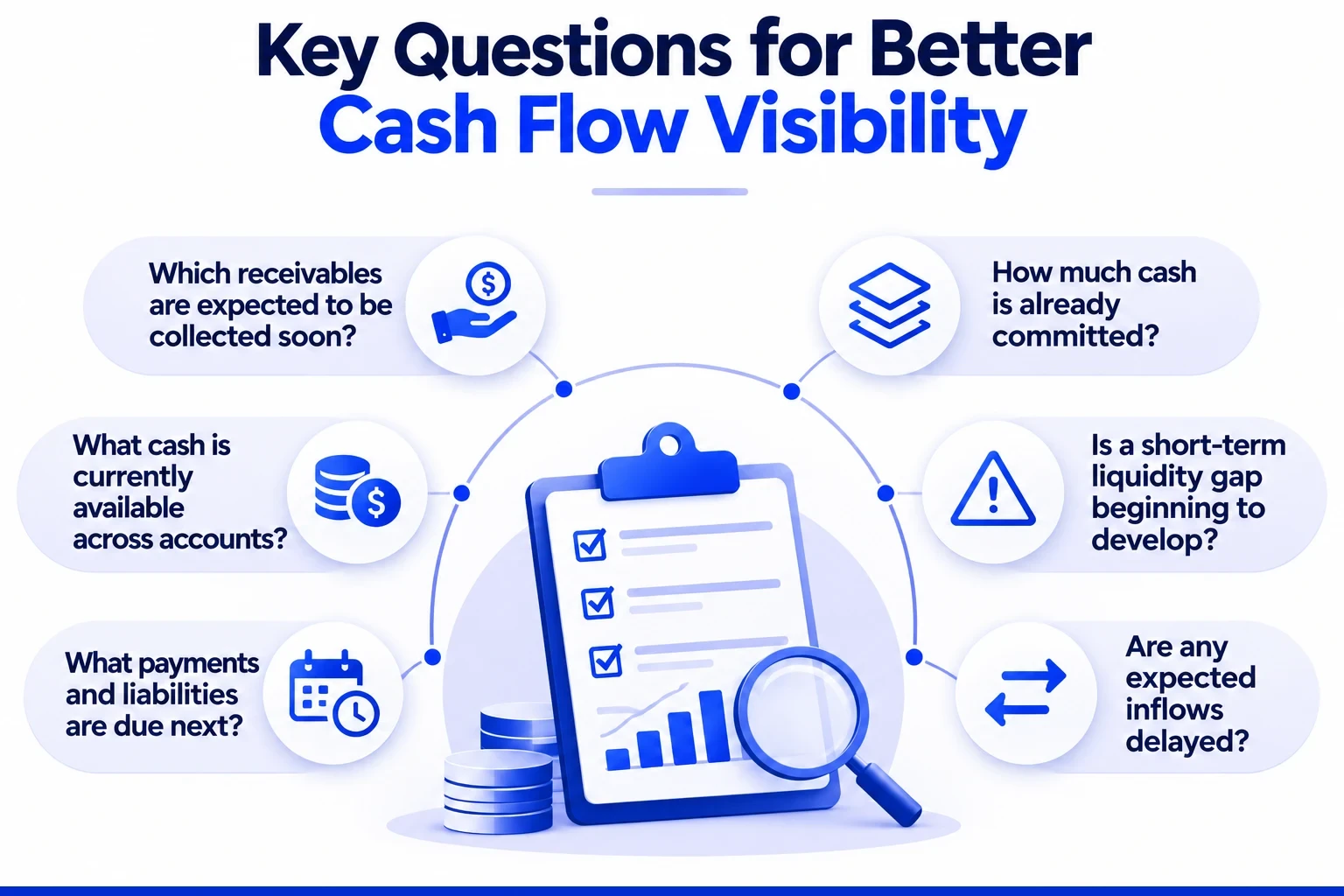
Real-time visibility, however, is not simply about refreshing a dashboard more frequently. The underlying data also needs to be accurate, timely, and connected. This is why cash flow automation and data integration often need to work together.
What Are the Benefits of Automated Cash Flow Management?
The value of automated cash flow management goes beyond reducing spreadsheet work. Its larger contribution is giving businesses more control over how cash is monitored, forecasted, and allocated.
- Better liquidity control: Current information on balances, receivables, and upcoming obligations helps finance teams understand how much cash is available for use.
- More reliable Cash Flow Forecasting: Forecasts can be updated using more recent financial activity instead of relying heavily on manually collected historical data.
- Earlier identification of cash gaps: Delayed collections, unexpected expenses, or unusually high payment obligations can become visible sooner.
- Stronger working capital decisions: Businesses can make more informed decisions about payment timing, collections, short-term funding, and surplus cash.
- Less time spent consolidating financial data: Finance teams can spend less time gathering information and more time reviewing exceptions, analyzing liquidity, and supporting business decisions.
For business owners, this means cash management becomes less dependent on hindsight and more focused on what is likely to happen next.
How Can Businesses Improve Cash Flow Management with Automation?
Improving cash flow optimization is ultimately about making better decisions around timing, liquidity, and working capital.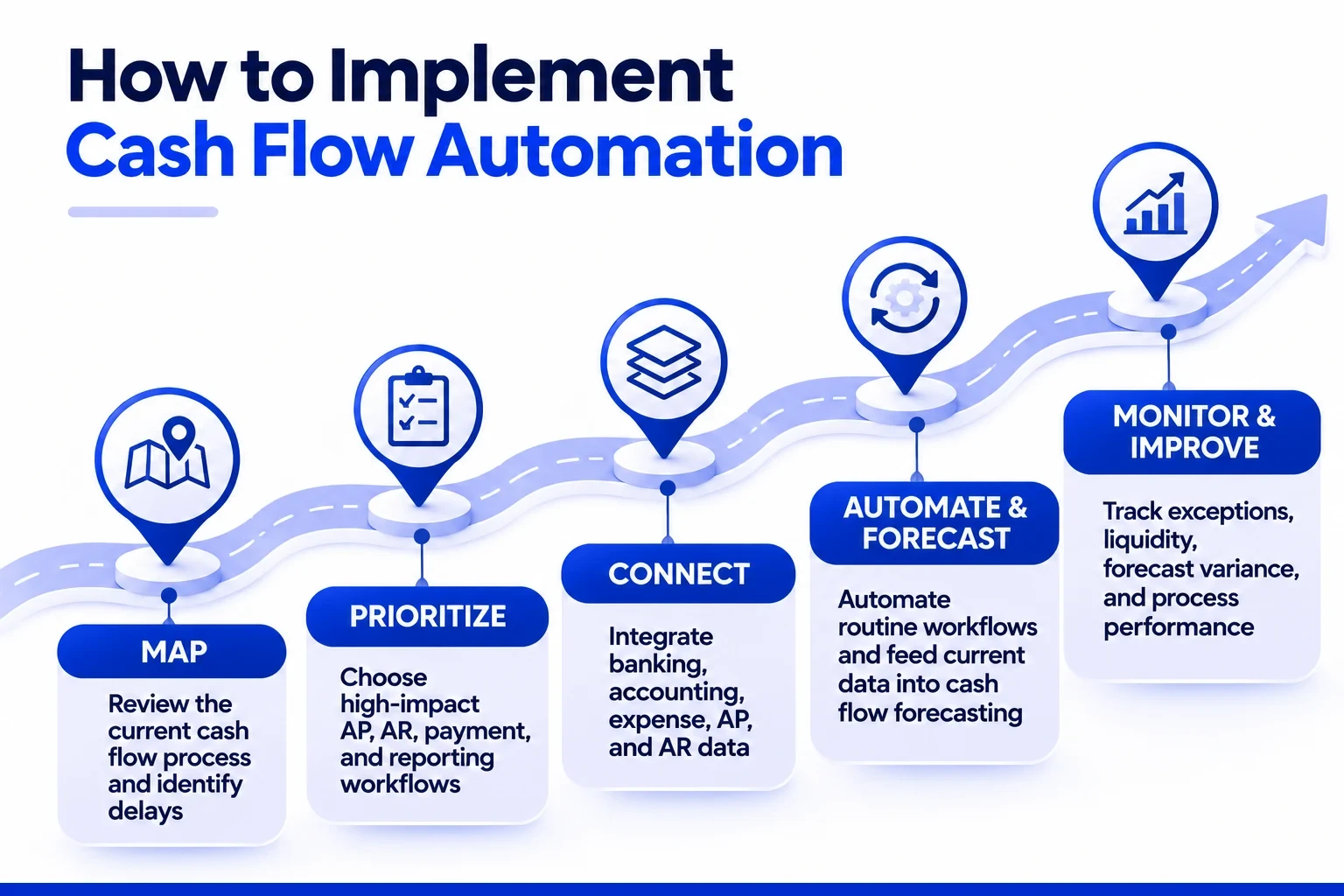
Automation helps by reducing the delay between financial activity taking place and that activity becomes visible to the people making decisions. Receivables can be monitored more closely, payment obligations can be planned earlier, spending can enter the cash picture sooner, and forecasts can respond faster to changes in the business.
This is where FBSPL can support businesses more effectively. By reviewing existing finance workflows, identifying process gaps, and helping automate repetitive activities, FBSPL supports better visibility across receivables, payables, reporting, and Cash Flow Forecasting. The focus is not just on implementing automation, but on making sure the process behind it is structured, reliable, and aligned with business needs.
Bhavishya Bhardwaj
Bhavishya Bhardwaj is the Digital Marketing Manager at FBSPL, bringing over a decade of experience across insurance, outsourcing, accounting, and digital transformation.
Frequently Asked Questions
Cash flow optimization is the process of improving how a business manages cash inflows, outflows, timing, and liquidity. It helps businesses maintain enough cash for obligations while making more efficient use of available funds.
Leave a Comment
Table of Content
Subscribe our Newsletter
Get the latest insights on insurance operations, policy management, and industry best practices.