
7 MIN READ·Jul 18, 2025

Why is traditional reporting failing modern businesses, and how AI is quietly fixing it behind the scenes? Let’s take a deeper look.
Most growing companies don’t realize how much money they’re bleeding through broken reporting systems, until a mistake forces them to. Financial reports are supposed to be the thing you can rely on. But in many businesses, they’re messy, delayed, or riddled with errors. The pressure is constant: tighter deadlines, stricter compliance, and less room for mistakes.
And here’s the thing, more data hasn’t made this easier. It’s made it harder. Finance teams are drowning in numbers with not enough time to make sense of them all.
The good news? AI isn’t just helping businesses keep up; it’s giving them a serious edge. Companies using AI in financial reporting are catching issues earlier, forecasting better, and cutting down reporting time by days.
More U.S. businesses are starting to outsource this function entirely; tapping into teams already trained to blend accounting with automation, so they don’t have to figure it out from scratch.
In this blog, we’re looking at the real pain points in financial reporting, how AI is being used to solve them, strategies to build automation into your process, and why smart outsourcing could save your team more than just time.
What’s eating into your bottom line while nobody’s watching.
Let’s stop pretending the current way works. Most reporting processes are cobbled together from half-manual systems, legacy tools, and a lot of late nights. Here’s what businesses are still struggling with:
A real-world example? An Illinois-based healthcare supplier once submitted an inaccurate tax filing after misreporting vendor credits. The mistake wasn’t caught until an external audit, and it led to a $48,000 penalty. After that, they switched to automated reconciliation and real-time reporting.
The issue isn’t that teams are careless. It’s that they’re working with tools that weren’t built for the speed, scale, and scrutiny of today’s environment.
What’s Actually Working?
Forget the sci-fi version. Here’s what AI actually does when embedded into financial reporting in accounting:
Want to see how AI is reshaping the broader accounting ecosystem? Read our full breakdown on how automation and AI are transforming modern accounting. It connects the dots between reporting, reconciliation, and forecasting.
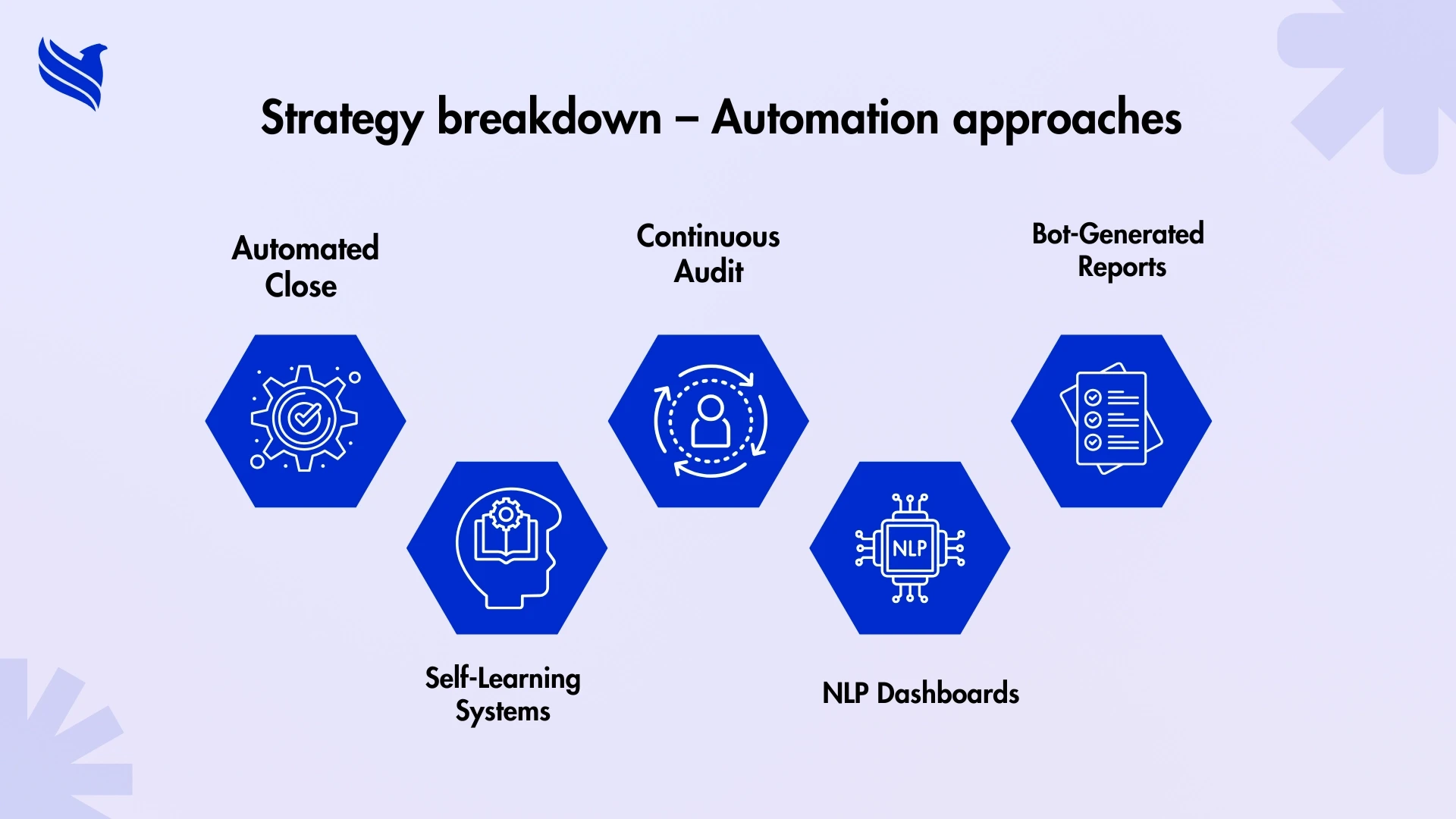
No two businesses need the same playbook. But these 5 strategies are a good place to start.
AI isn’t plug-and-play; you’ve got to integrate it into your reporting lifecycle in ways that make sense for your business. Here’s how companies are doing that:
1. Automated close: AI bots can reconcile ledgers, flag open items, and validate balances at record speed.
2. Self-learning categorization engines: These systems improve over time. The more data they process, the better they get at classifying transactions, catching duplicates, and tagging entries for compliance.
3. Continuous audit trails: AI tracks changes, who made them, and why, creating a real-time audit trail that satisfies even the most demanding regulators.
4. Integrated dashboards with Natural Language Processing (NLP): Forget pivot tables. Executives can now ask “What were our top five expense drivers last quarter?” and get instant answers, thanks to NLP layered on top of financial BI dashboards.
5. Bot-driven report generation: Quarterly reports, income statements, cash flow summaries, AI tools now compile these using live data without human involvement, slashing labor hours and reducing errors.
Because compliance isn’t optional; AI helps you sleep better at night.
Financial reporting isn’t just about numbers. It’s about staying on the right side of tax laws, GAAP standards, SEC guidelines, and industry-specific mandates. AI now plays a crucial role in:
In the wake of Sarbanes-Oxley (SOX) compliance pressures, more CFOs are turning to AI tools that build automated internal controls right into the reporting system.
We also recommend diving into our guide on Financial Reporting: What It Is and Why It Matters if you're looking to brush up on the foundational principles that all this AI rides on.
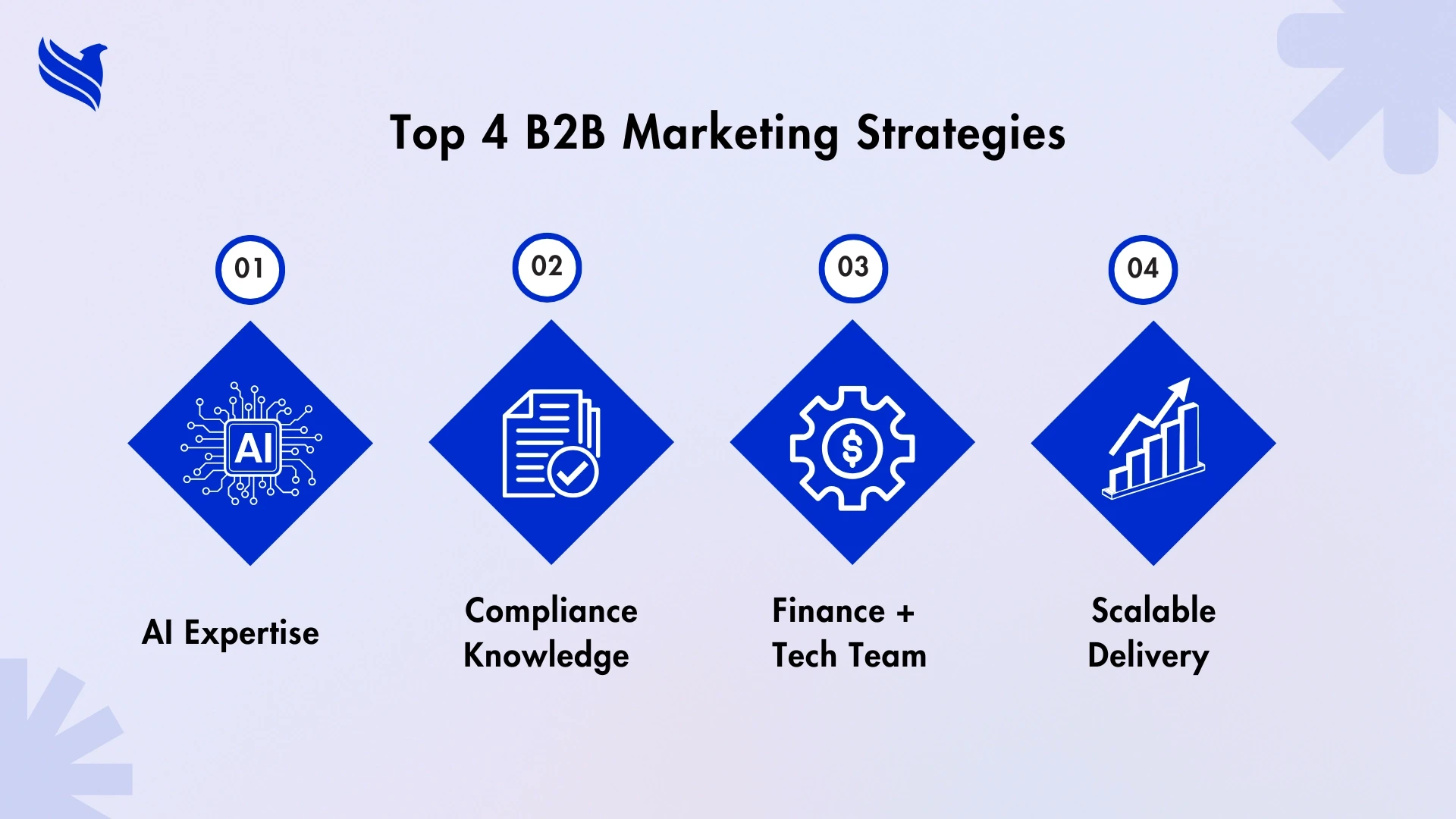
Because doing it all in-house isn’t scalable; or cost-efficient.
Not every company can afford to hire AI specialists or build custom reporting systems. But that doesn’t mean you miss out.
Outsourcing financial reporting services, especially to firms that have already built AI into their stack, can help you punch above your weight class. Here's how:
Take the case of a Texas-based SaaS firm that outsourced its AI-enabled reporting to an India-based partner. The move cut monthly reporting costs by 45% and reduced errors by 72% in the first six months.
When outsourcing, look for partners who aren’t just accountants, but have expertise in automation, compliance, and AI analytics. (FBSPL checks those boxes.)
You don’t need a massive team. You don’t need a custom platform. You just need to stop doing it the old way.
AI is already helping U.S. businesses stay compliant, move faster, and make cleaner decisions. When combined with smart financial reporting services, it turns reporting from a burden into a competitive edge.
Whether you’re trying to impress investors, pass audits, or just get a clear handle on how your business is doing; AI gets you there faster, and with fewer surprises.
If your internal team is stretched thin, and you’re done waiting on half-complete reports, outsourcing your financial reporting might be the smartest step you take this year. FBSPL can help you automate intelligently, scale affordably, and focus on what actually drives your business forward.
Ready to get reporting that works as hard as you do? Let’s talk.
Get the latest insights on insurance operations, policy management, and industry best practices.